







This topic describes the limitations, scenarios, and procedure for setting an incremental synchronization timestamp when you create a data migration task.
Limitations
When you create a data migration task, you can set an incremental synchronization timestamp only if you select Incremental Synchronization for the migration type and leave Full Migration unselected.
The incremental synchronization timestamp must be the current time or a point in time earlier than the current time. It cannot be later than the expiration time of incremental logs in the source database.
Application scenarios
You can set an incremental synchronization timestamp in the following scenarios:
You have verified data consistency between the source and target, and you want to create a data migration task to obtain the incremental data generated after a specific point in time and synchronize the data to the target database.
You no longer need the historical data in the source database, but want to synchronize only the incremental data generated after a specific point in time to the target database.
Procedure
Create a data migration task and proceed to the Select Type & Objects step.
For more information, see the topic about creating a data migration task between the corresponding data sources in the Data migration chapter.
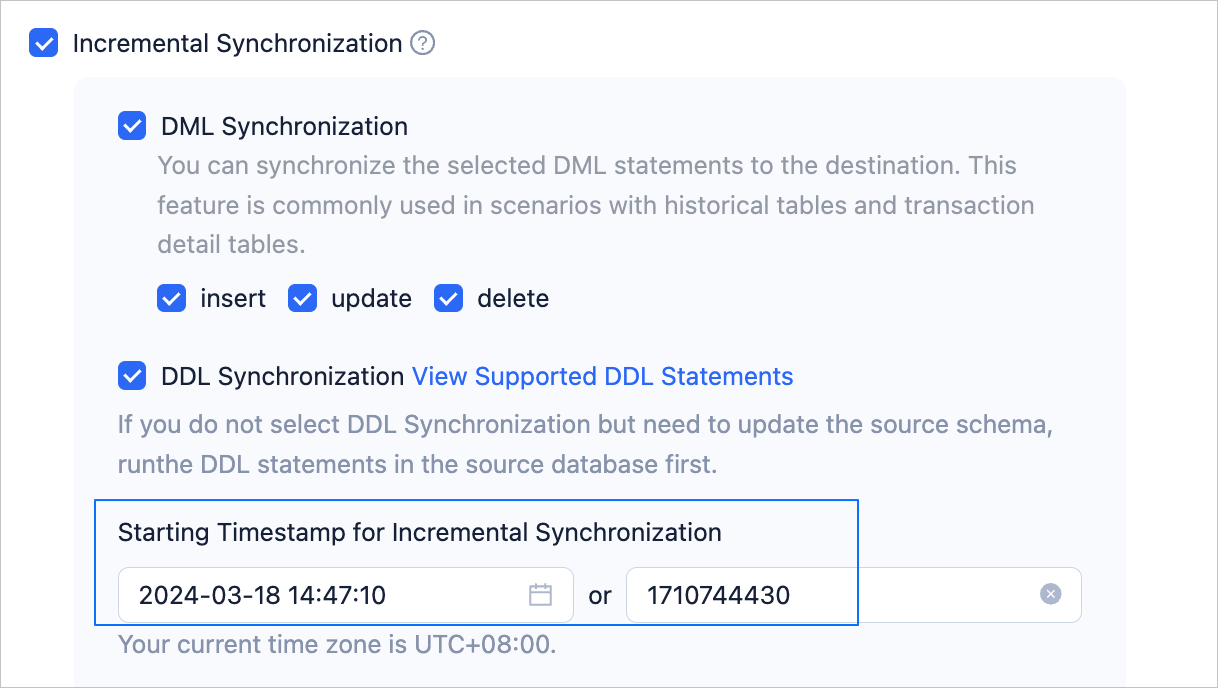
On the Select Type & Objects page, select migration types based on your business needs. You must select Incremental Synchronization and must not select Full Migration.
In the Incremental Synchronization Start Timestamp section, specify a timestamp so that data generated after this timestamp is synchronized. The default value is the current system time. You can select a point in time or enter a timestamp.
Note
The timestamp is related to the retention period of incremental logs in the source database. Generally, you can start data synchronization from the current timestamp.
Complete subsequent task settings as prompted.