







OceanBase Cloud Platform (OCP) has been upgraded in this version to support more features, such as SQL diagnostics and primary-standby decoupling. In addition, other features have been optimized.
Version information
Version: V3.3.0
Previous version: V3.2.3
Version release date: April 27, 2022
Supported upgrade path: You can directly upgrade OCP V2.3.x and later to this version. If you are using OCP V2.3.0 or earlier, you must first upgrade it to V2.3.x before upgrading to this version.
Supported OceanBase Database versions
OCP V3.3.0 supports the following OceanBase Database versions:
OceanBase V1.4.x
OceanBase V2.1.x
OceanBase V2.2.x
OceanBase V3.1.x
OceanBase V3.2.x
New features
Diagnostics
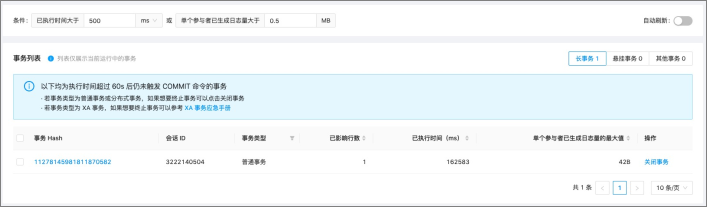
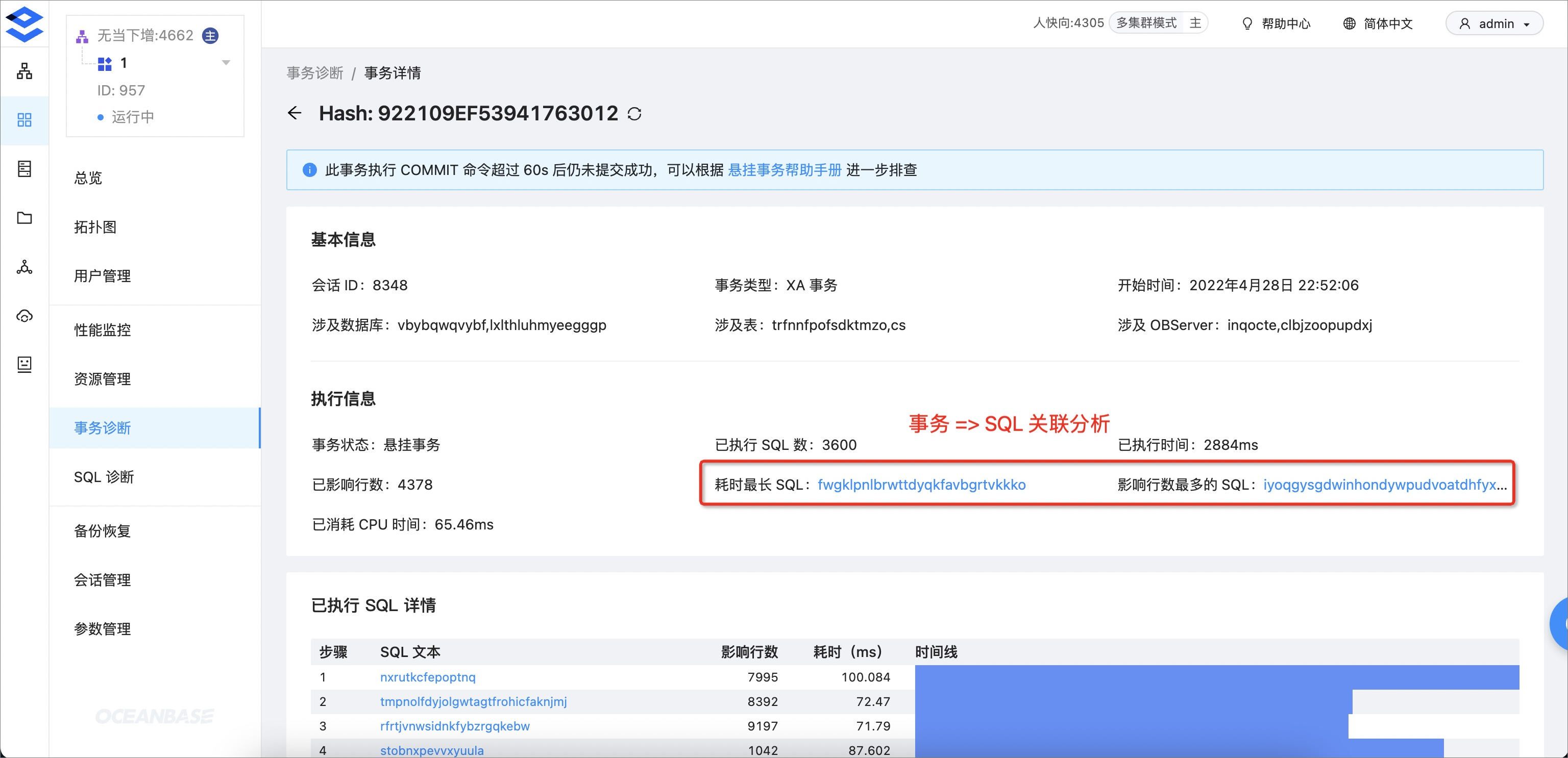
Transaction diagnostics
Long-running and hanging transactions in the call chain can occupy resources for a long time, leading to system instability and affecting the efficient service provided by the system. Transaction diagnostics provide monitoring and analysis of transactions, including Execution Information and Details About Executed SQL Statements, to identify the specific reasons for time or resource consumption in transactions.
OCP also provides emergency measures for abnormal transactions, allowing you to disable them with a single click to help the system quickly return to a stable state.
Correlation analysis
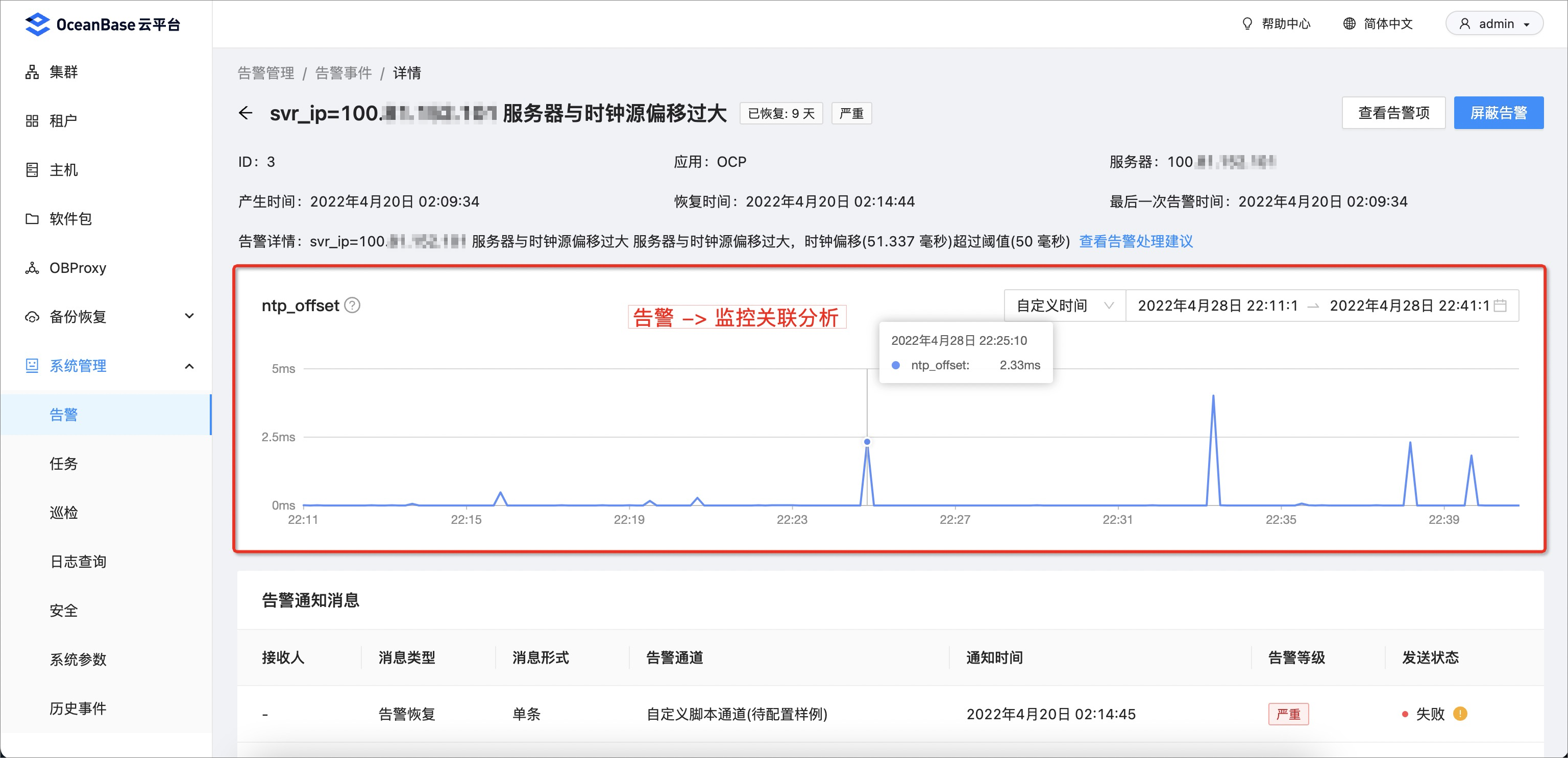
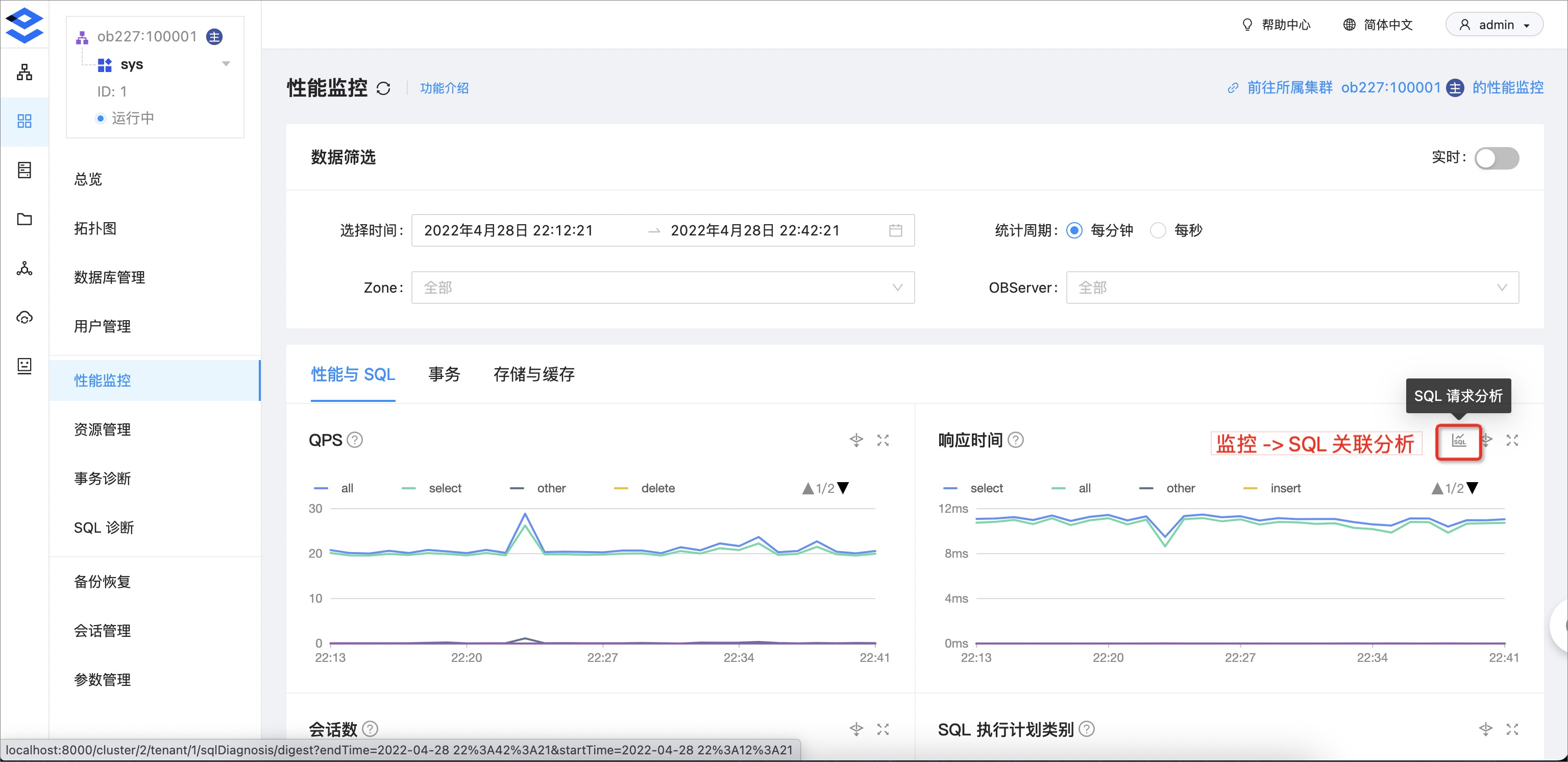
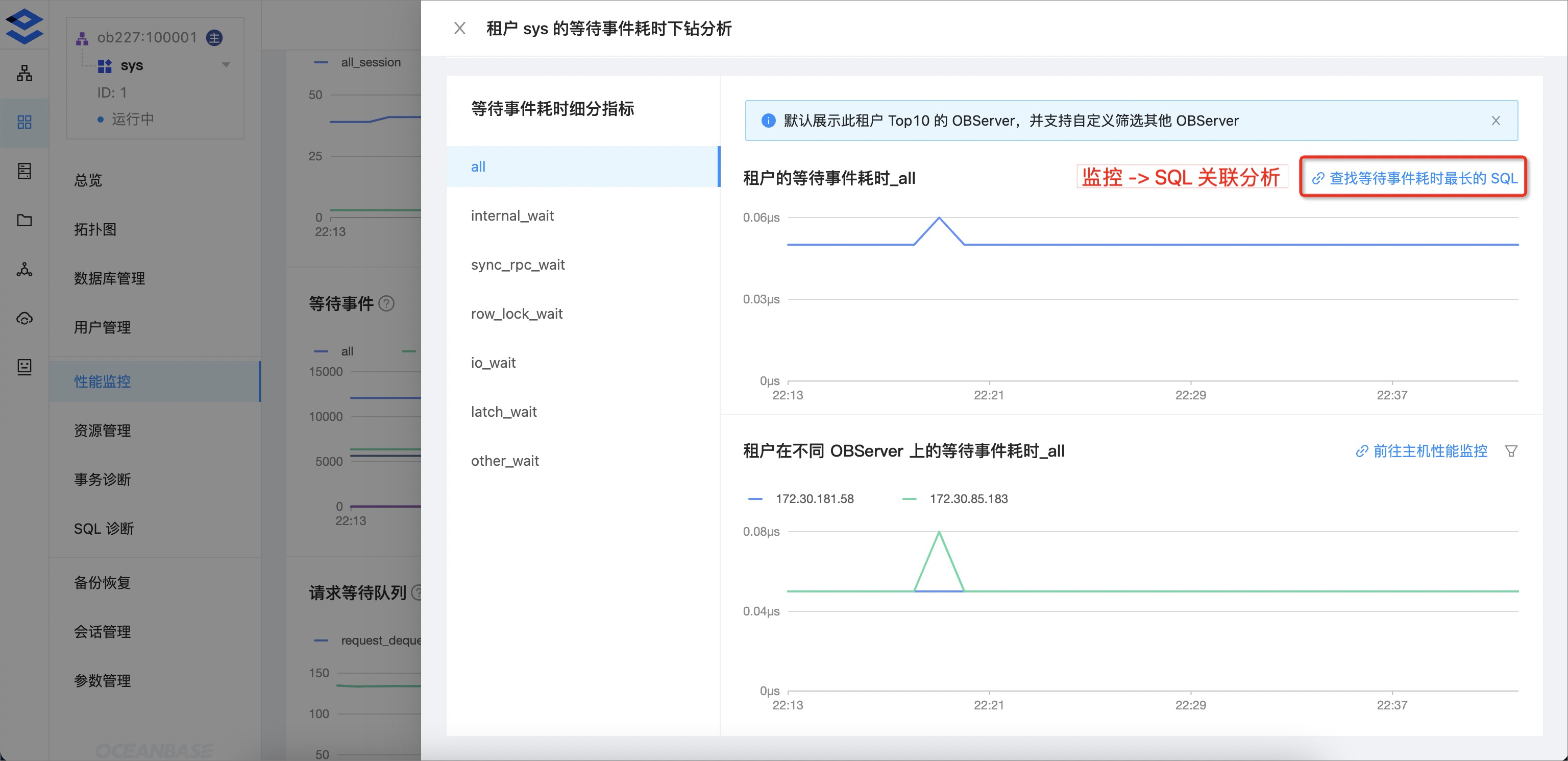
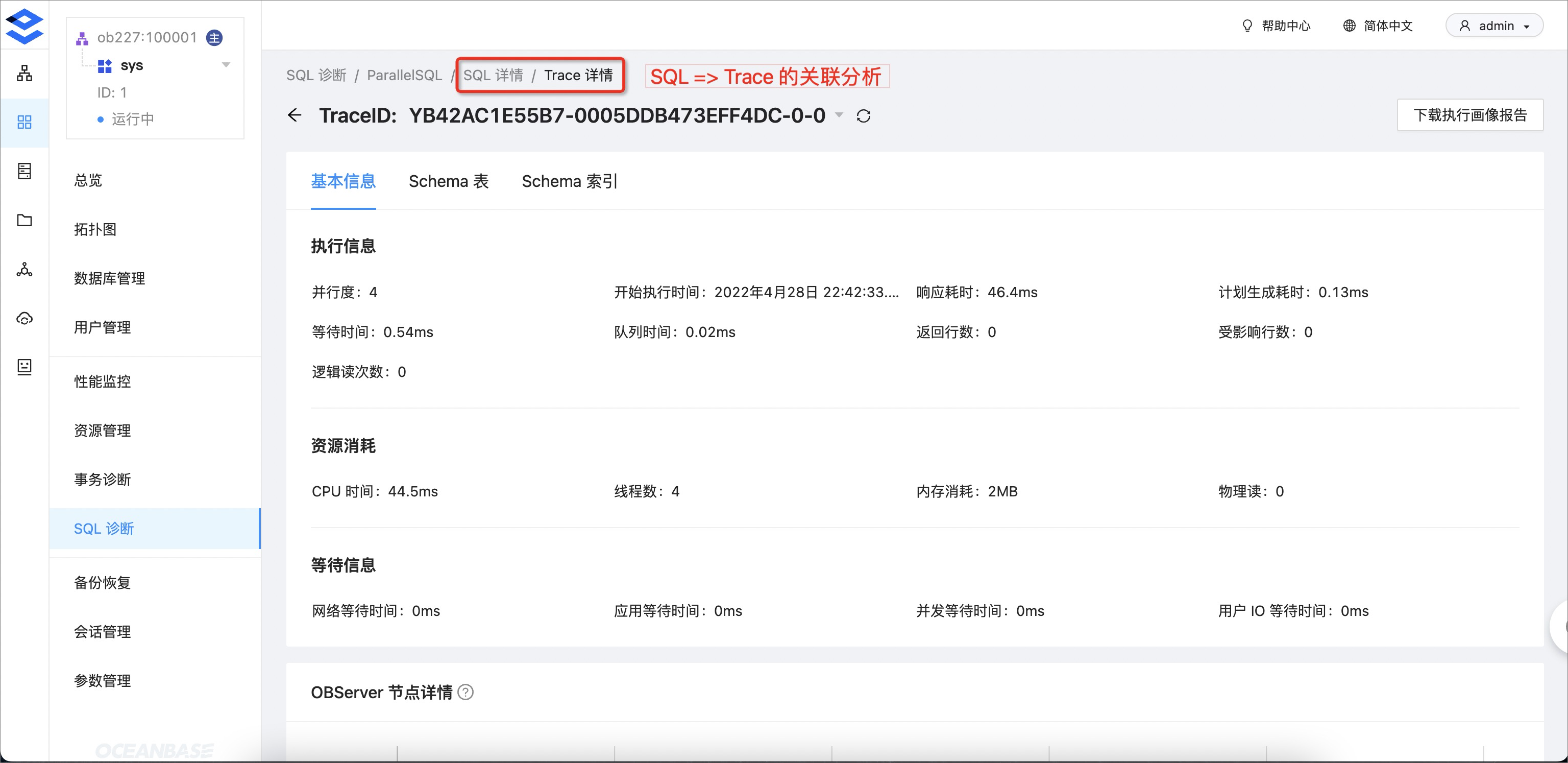
In addition to adding more diagnostic dimensions (transaction diagnostics, AP SQL diagnostics, and SQL request analysis), OCP also supports correlation analysis between alerts, monitoring, transactions, SQL, and trace data.
SQL request analysis
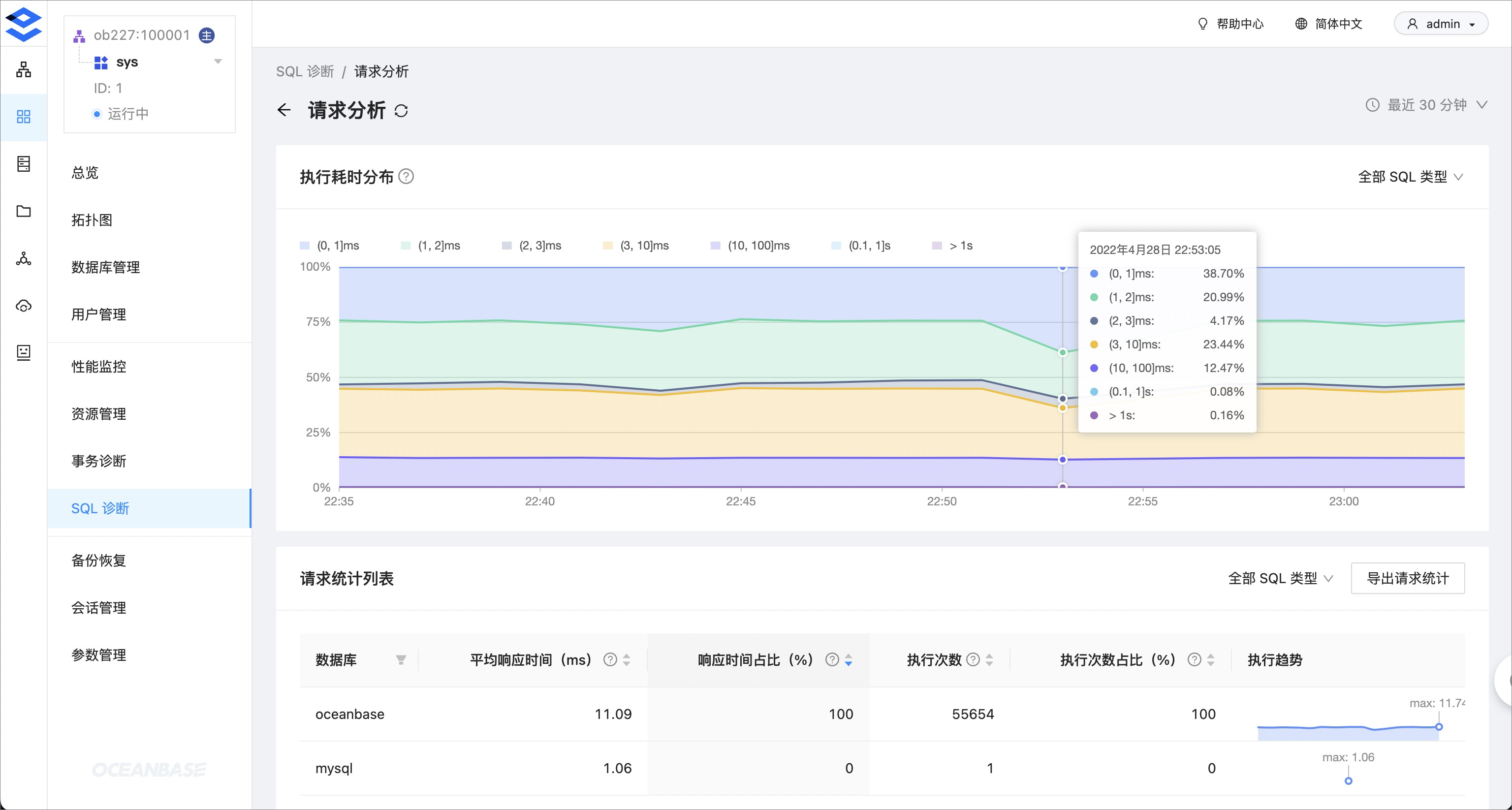
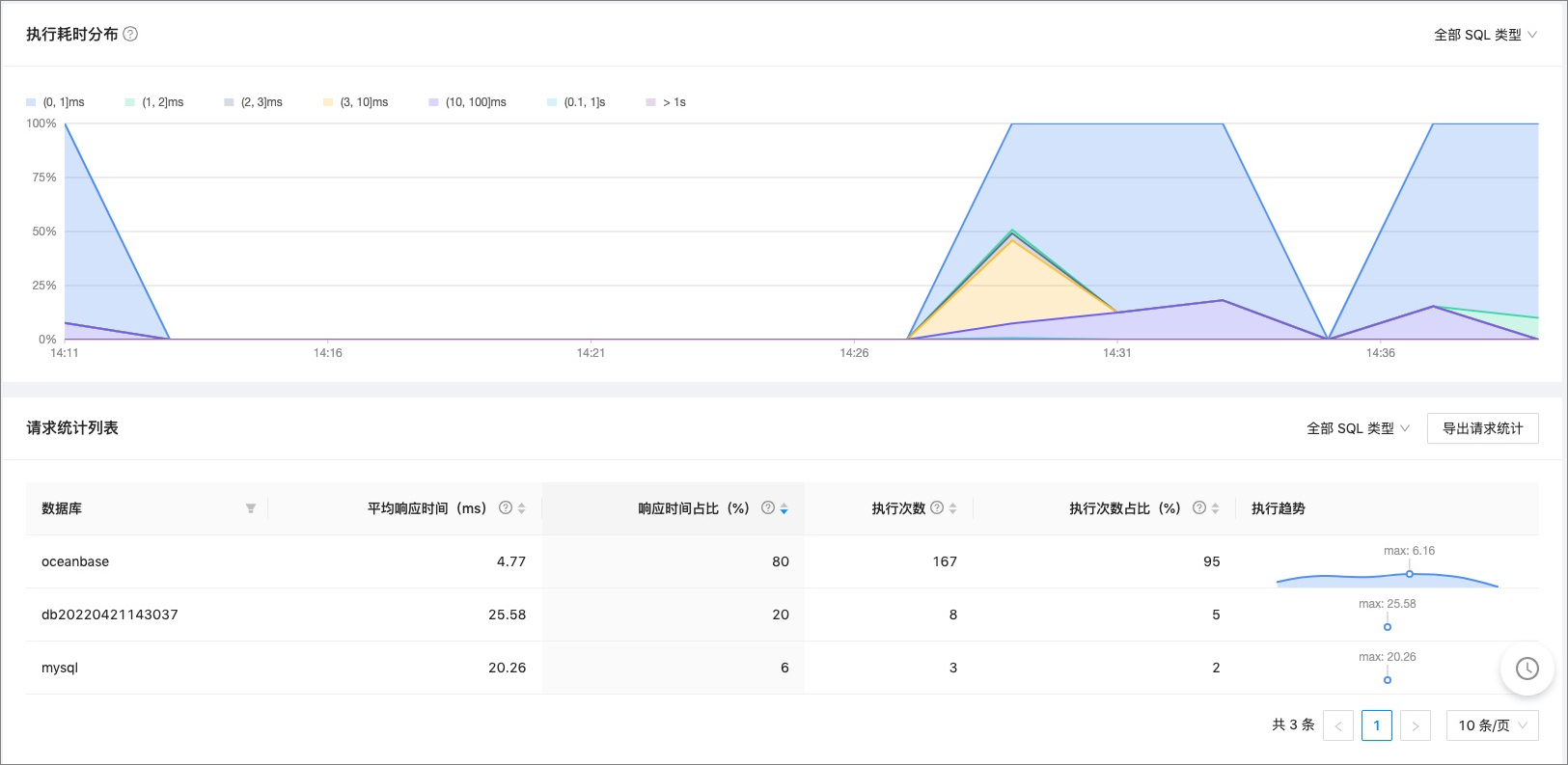
In addition to SQL diagnostics, OCP now supports SQL request analysis, which provides an analysis of all database requests from the database/SQL perspective. This includes execution time distribution, the proportion of each SQL type, and execution trends. This helps you gain a more comprehensive understanding of SQL execution and enables you to quickly detect any anomalies during SQL execution.
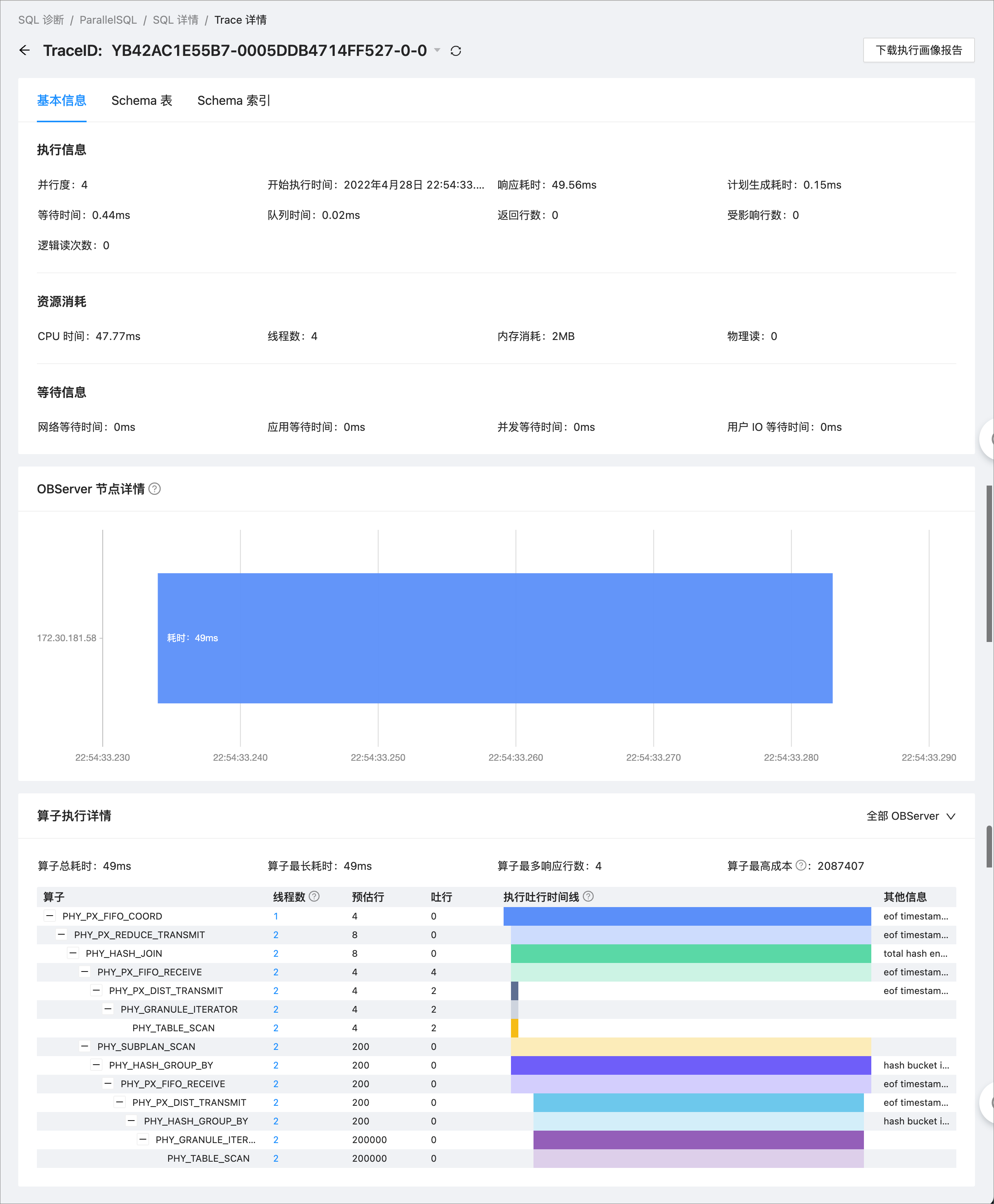
Parallel SQL execution profiling
OCP enhances the analysis and diagnostics capabilities for OLAP-type SQL in SQL diagnostics. In complex SQL scenarios such as distributed queries, parallel queries, multi-table joins, and AP queries, it helps you identify slow operators or steps in SQL execution, accelerating the SQL tuning process.
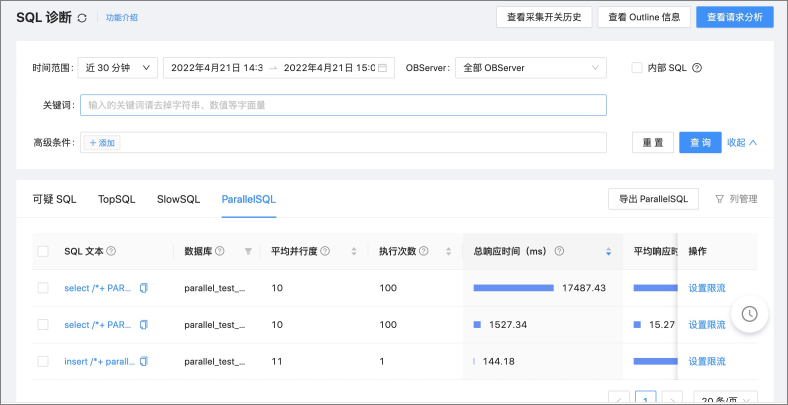
Offline parallel SQL execution profiling is as follows:
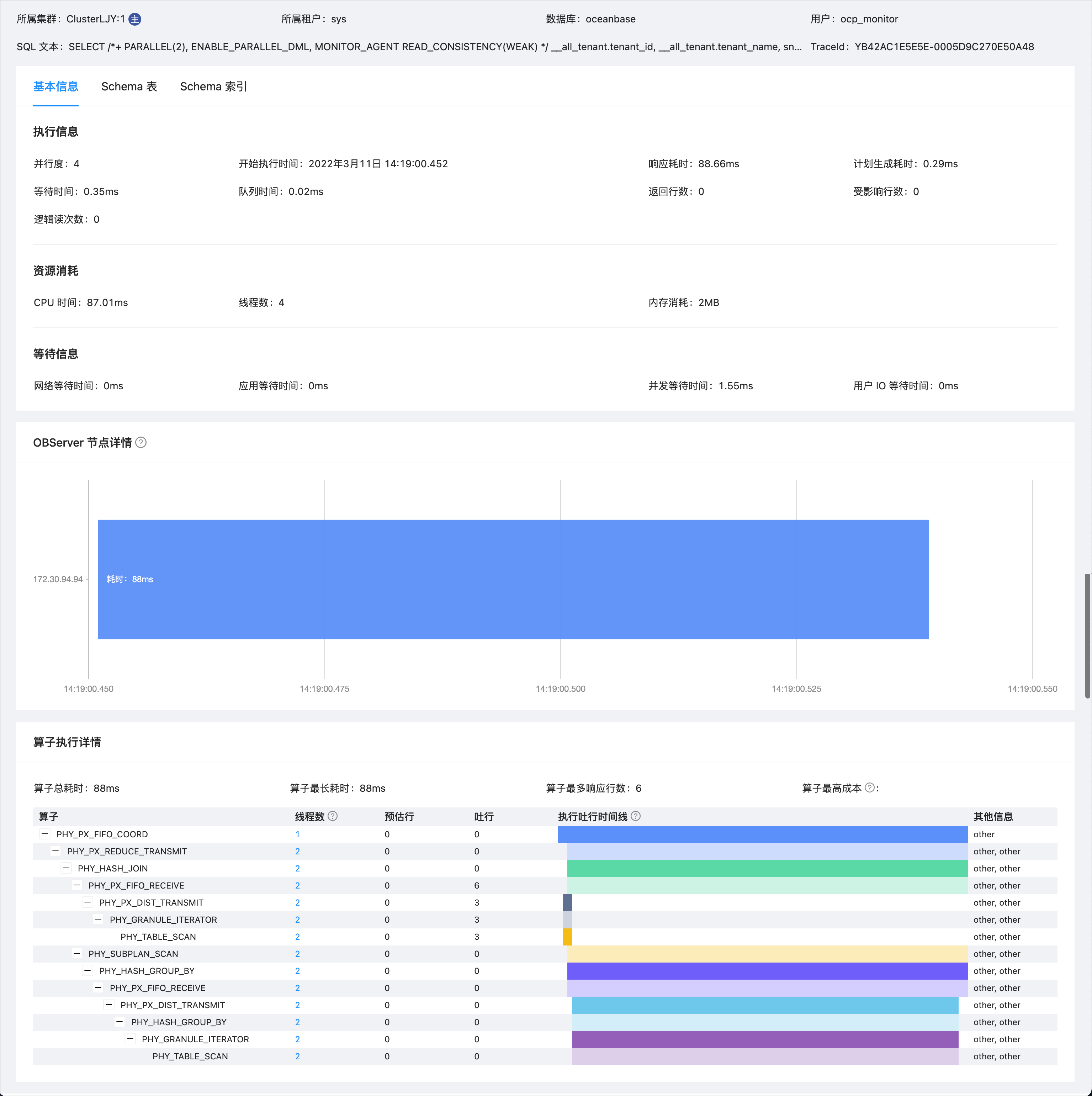
Online parallel SQL execution profiling is as follows:
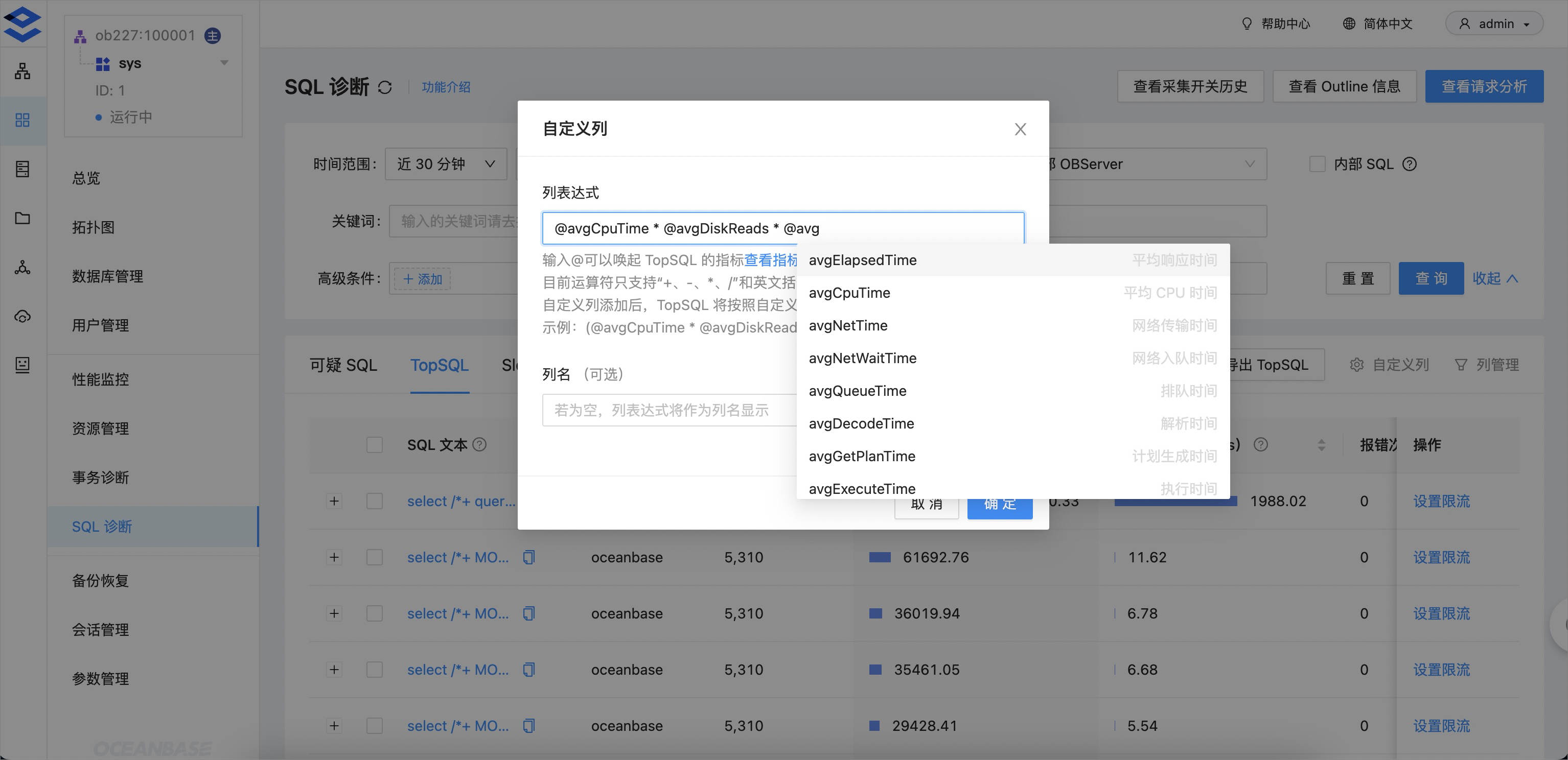
Custom columns
In SQL diagnostics, you can define custom columns and apply advanced condition filters.
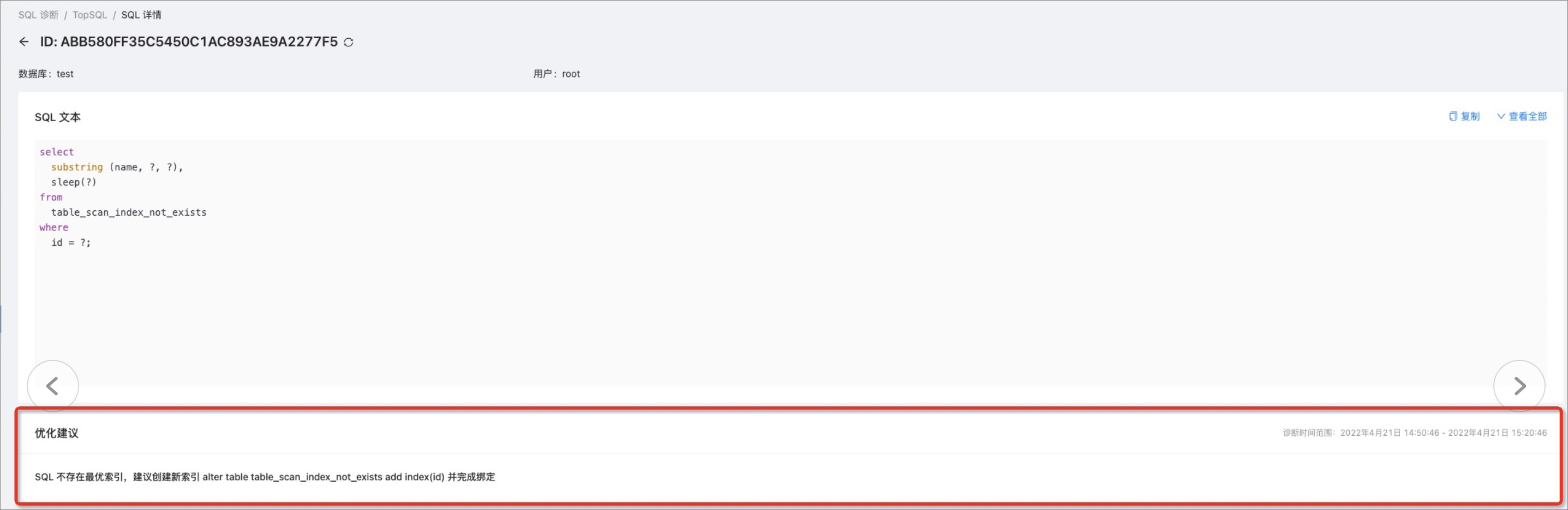
SQL optimization suggestions
SQL diagnostics can detect the presence of SlowSQL and suspicious SQL based on expert experience. It also provides practical emergency measures, such as SQL throttling and plan/index binding. However, you need to determine the appropriate emergency actions for the detected SQL. SQL optimization suggestions guide you on how to optimize SQL.
OCP now supports suggestions for optimal index creation, historical execution plan recommendations, and tenant CPU expansion recommendations, helping you quickly resolve SQL issues.
Deadlock detection
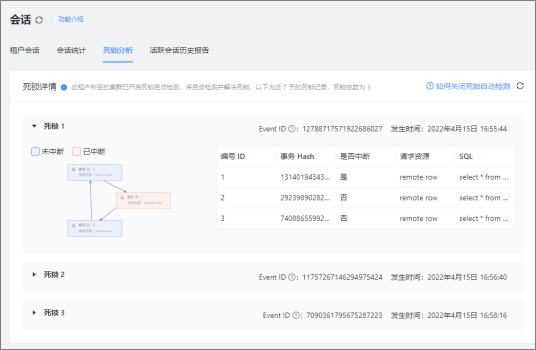
Deadlock detection provides detailed information about deadlocks, including the roles of participants, the execution order, and the corresponding SQL statements. This helps you analyze the root causes of deadlocks and resolve them by analyzing and addressing circular dependencies.
Emergency measures
In addition to binding execution plans, OCP now supports emergency measures for individual and batch SQL throttling.
Primary and standby databases
Decoupling of primary and standby databases
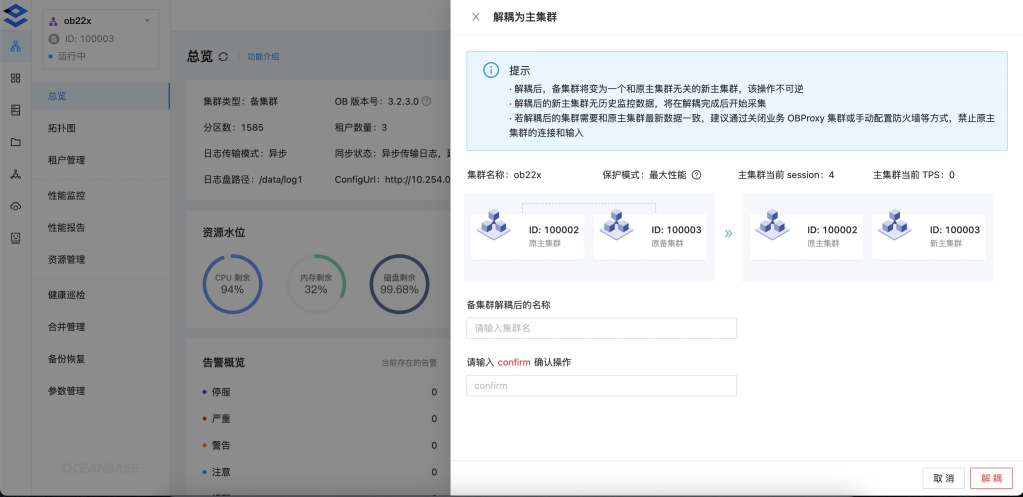
OCP allows you to physically split the primary and standby databases, promoting the standby database to a primary database. This facilitates production environment testing and pressure testing.
Read-only mode for the original primary database after failover
To facilitate data verification and migration for the new primary database, OCP supports starting the original primary database in read-only mode after a failover. After the original primary database is started in read-only mode, you can compare and correct data between the new and original primary databases.
Alerts
You can customize alerts and convert monitoring metrics into alert information.
Capacity management
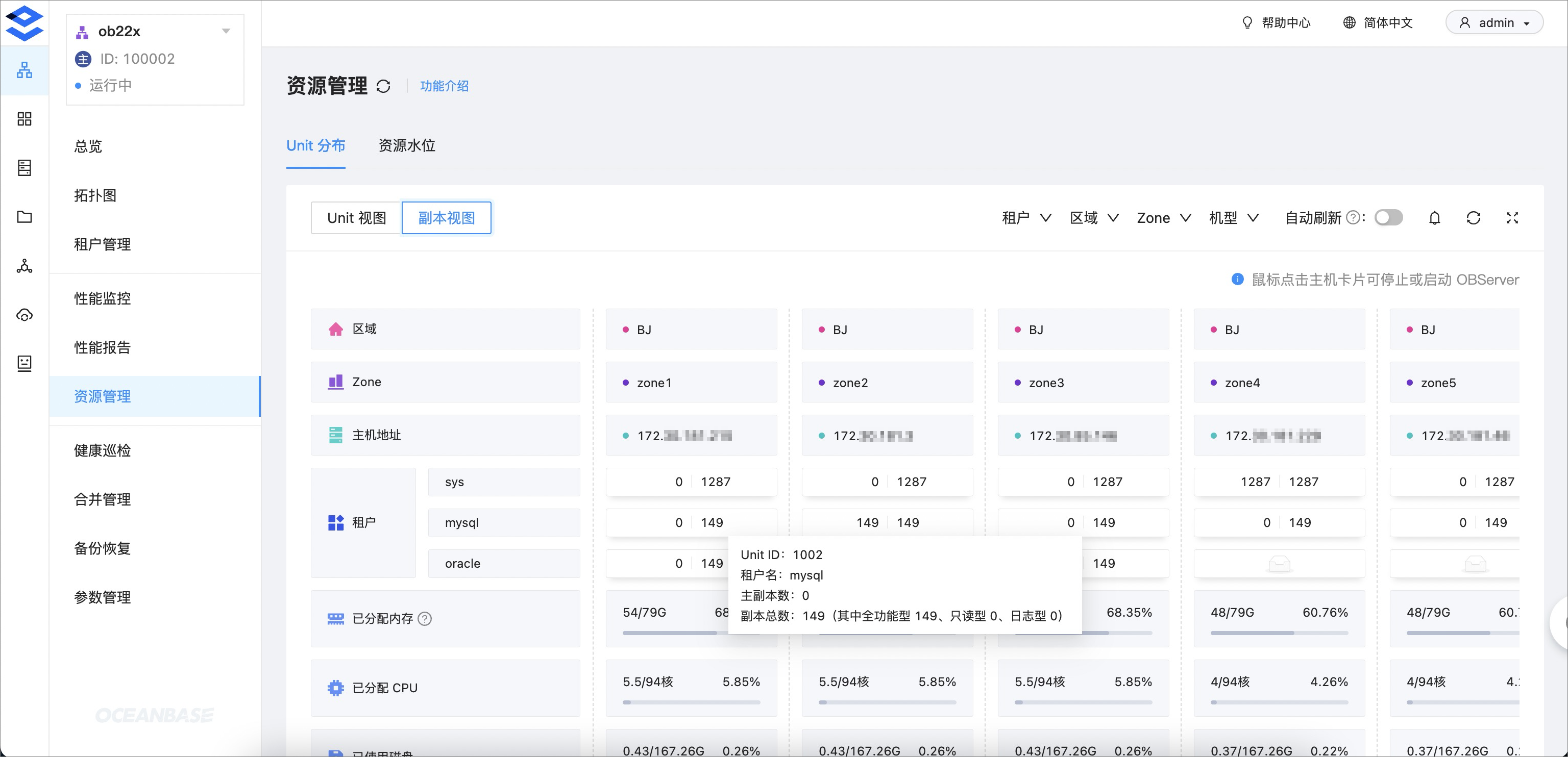
The Resource Management page of a cluster now includes a replica view, which displays the distribution of replicas.
Backup and restore
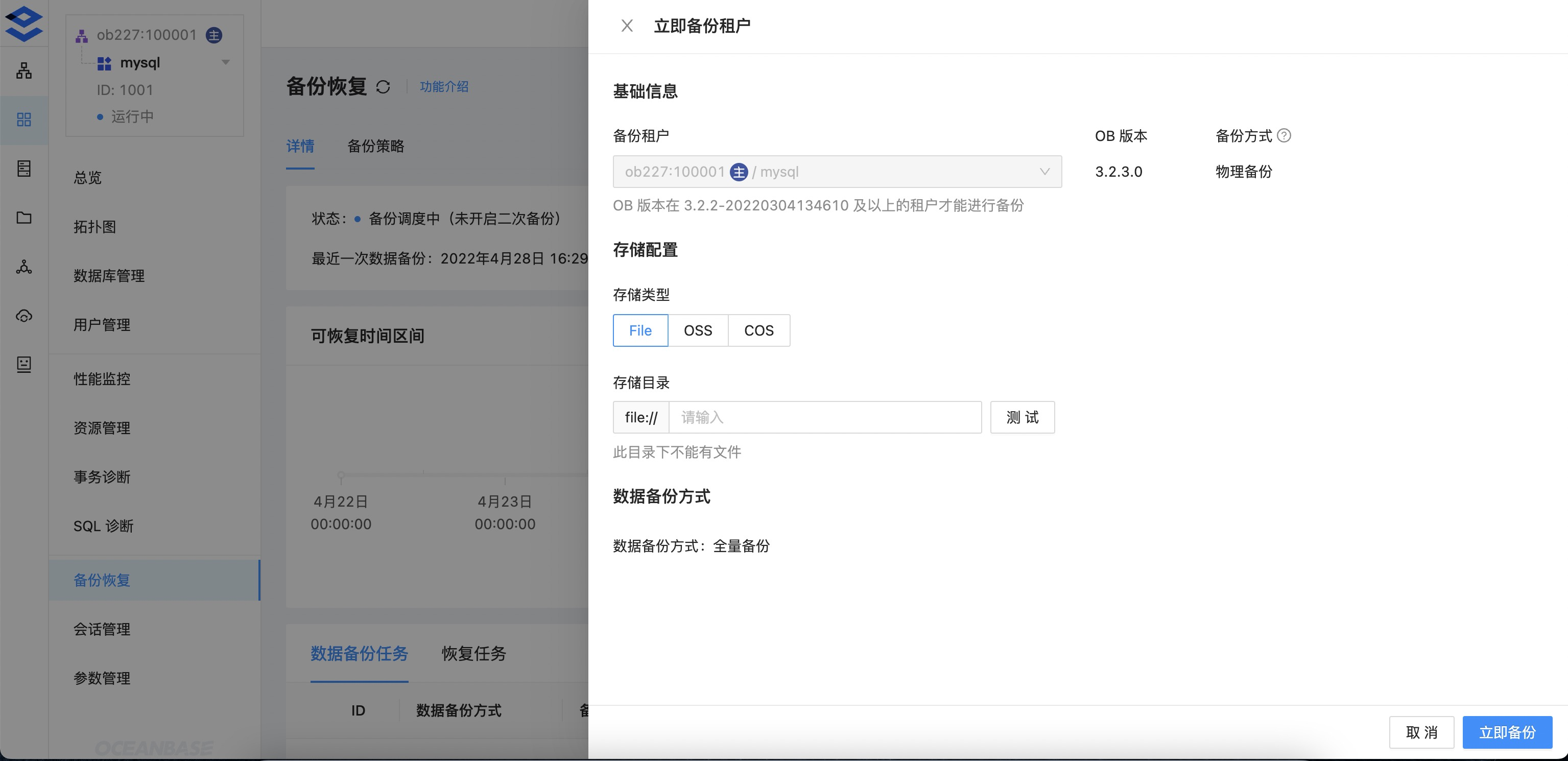
You can perform snapshot backups at the tenant level.
Feature enhancements
Enhanced alerting capabilities, including custom alert metrics and the ability to convert monitoring metrics into alert information. You can also configure alerts for slow SQL queries.
Enhanced organization management, allowing you to group all resources under a single organization for easier management and identification.
Enhanced Performance Monitoring functionality, with new statistics such as Block Cache Size, Cache Hit Rate, Cache Request Count, and Open Cursor Count now displayed.
Enhanced data middleware capabilities, with logs collected by ocp-agent from OBServer nodes and OBProxy written to storage platforms like ES and SLS. This provides comprehensive log query capabilities and lays the foundation for advanced log analysis features.
Fixed issues
OCP V3.3.0 fixes the following issues:
The issue where the agent fails to reinstall in specific scenarios.
The issue where tenant data may be deleted during rollback or retry during OceanBase upgrade.
The issue where the OBProxy configuration page displays "The parameter version of OBProxy is inconsistent with that of the cluster. Please refresh the configuration" in specific scenarios.
The issue where OBProxy processes are restarted continuously in specific scenarios.
The issue where the host status is displayed incorrectly in specific scenarios.
The issue where an error is reported when sorting software packages.
The issue where the tenant name is displayed incorrectly in the cluster performance report in specific scenarios.
The issue where a large number of tmp log files are left behind due to a bug in the logback component.
The issue where SQL diagnostics cannot query data in specific scenarios.
The issue where the OCP frontend responds extremely slowly, and the CPU usage of the ocp-server container remains high.
Known issues
No. |
Known issue |
Workaround |
|---|---|---|
| 1 | The sys tenant is continuously alerted for SlowSQL. | This does not affect business operations, so no workaround is needed. |
| 2 | The alert table lacks indexes, making it impossible to process a large amount of alert history data. | We recommend that you upgrade OCP to V3.3.0 or manually update the OCP alert internal table when you deploy OCP V3.3.0 from scratch to improve alert query performance. |
| 3 | The SQL diagnostics feature in OCP V3.3.0 is incompatible with low versions of OceanBase (ob1479). | OCP has some compatibility issues with ob1479. We do not recommend that you manage ob1479 clusters. |
| 4 | A new role has all permissions for the cluster and tenants, but cannot create a tenant in the cluster. | When you create a new role, you must manually add the Host Read-Only permission. Otherwise, you cannot fully manage the cluster. |
Limitations
Hardware requirements
OCP-Server can be installed on a physical server or in a Docker container. OCP-Server supports multi-node high availability deployment.
The minimum hardware requirements for OCP-Server nodes are as follows:
Hardware |
Requirements |
|---|---|
| CPU | |
| Memory | 16 GB of available memory |
| NIC | 10 GbE |
OCP-Agent consumes very few resources and has no special hardware requirements for the installation node.
Operating system requirements
The following table lists the operating system requirements for installing OCP (including OCP-Agent).
Server type |
Operating system |
Supported versions |
|---|---|---|
| x86_64 | RHEL | 7.2 and later |
| x86_64 | CentOS | 7.2 and later |
| x86_64 | AliOS | 7.2 and later |
| x86_64 | openSUSE | 12SP3 and later |
| ARM aarch64 | AliOS | 7.2 and later |
| ARM aarch64 | NeoKylin | 7.6 |
| ARM aarch64 | Huawei EulerOS | 2.0 SP8 |
Client requirements
General users usually access OCP services through a web browser. The following table lists the client requirements.
Browser |
Minimum version |
|---|---|
| Chrome | 81 |
| Firefox | 64 |
| Safari | 10 |
| Edge | 13 |
If you need to access OCP from an iOS device, the minimum operating system version is as follows:
Operating system |
Minimum version |
|---|---|
| iOS | 10 |
For the best user experience, we recommend that you use a display with a resolution greater than 1440 x 810.