OceanBase logo

OceanBase

A unified distributed database ready for your transactional, analytical, and AI workloads.

DEPLOY YOUR WAY

OceanBase Cloud

The best way to deploy and scale OceanBase

OceanBase Enterprise

Run and manage OceanBase on your infra

TRY OPEN SOURCE

OceanBase Community Edition

The free, open-source distributed database

OceanBase seekdb

Open source AI native search database

Customer Stories

Real-world success stories from enterprises across diverse industries.

View All
BY USE CASES

Mission-Critical Transactions

Global & Multicloud Application

Elastic Scaling for Peak Traffic

Real-time Analytics

Active Geo-redundancy

Database Consolidation

Resources

Comprehensive knowledge hub for OceanBase.

Blog

Live Demos

Training & Certification

Documentation

Official technical guides, tutorials, API references, and manuals for all OceanBase products.

View All
PRODUCTS

OceanBase Cloud

OceanBase Database

Tools

Connectors and Middleware

QUICK START

OceanBase Cloud

OceanBase Database

BEST PRACTICES

Practical guides for utilizing OceanBase more effectively and conveniently

Company

Learn more about OceanBase – our company, partnerships, and trust and security initiatives.

About OceanBase

Partner

Trust Center

Contact Us

International - English
中国站 - 简体中文
日本 - 日本語
Sign In
Start on Cloud

A unified distributed database ready for your transactional, analytical, and AI workloads.

DEPLOY YOUR WAY

OceanBase Cloud

The best way to deploy and scale OceanBase

OceanBase Enterprise

Run and manage OceanBase on your infra

TRY OPEN SOURCE

OceanBase Community Edition

The free, open-source distributed database

OceanBase seekdb

Open source AI native search database

Customer Stories

Real-world success stories from enterprises across diverse industries.

View All
BY USE CASES

Mission-Critical Transactions

Global & Multicloud Application

Elastic Scaling for Peak Traffic

Real-time Analytics

Active Geo-redundancy

Database Consolidation

Comprehensive knowledge hub for OceanBase.

Blog

Live Demos

Training & Certification

Documentation

Official technical guides, tutorials, API references, and manuals for all OceanBase products.

View All
PRODUCTS
OceanBase CloudOceanBase Database
ToolsConnectors and Middleware
QUICK START
OceanBase CloudOceanBase Database
BEST PRACTICES

Practical guides for utilizing OceanBase more effectively and conveniently

Learn more about OceanBase – our company, partnerships, and trust and security initiatives.

About OceanBase

Partner

Trust Center

Contact Us

Start on Cloud
编组
All Products
    • Databases
    • iconOceanBase Database
    • iconOceanBase Cloud
    • iconOceanBase Tugraph
    • iconInteractive Tutorials
    • iconOceanBase Best Practices
    • Tools
    • iconOceanBase Cloud Platform
    • iconOceanBase Migration Service
    • iconOceanBase Developer Center
    • iconOceanBase Migration Assessment
    • iconOceanBase Admin Tool
    • iconOceanBase Loader and Dumper
    • iconOceanBase Deployer
    • iconKubernetes operator for OceanBase
    • iconOceanBase Diagnostic Tool
    • iconOceanBase Binlog Service
    • Connectors and Middleware
    • iconOceanBase Database Proxy
    • iconEmbedded SQL in C for OceanBase
    • iconOceanBase Call Interface
    • iconOceanBase Connector/C
    • iconOceanBase Connector/J
    • iconOceanBase Connector/ODBC
    • iconOceanBase Connector/NET
icon

OceanBase Developer Center

V4.4.0

  • Topics Overview
  • Overview
    • What is ODC?
    • Features
    • Architecture
    • Limitations
    • ODC console
  • Quick Start
    • Client ODC
      • Overview
      • Install Client ODC
      • Use Client ODC
    • Web ODC
      • Overview
      • Deploy Web ODC
      • Use Web ODC
  • Data Source Management
    • Create a data source
    • Data sources and project collaboration
    • Database O&M
      • Session management
      • Global variable management
      • Recycle bin management
  • SQL Development
    • Edit and execute SQL statements
    • Perform PL compilation and debugging
    • Use the command-line window
    • Edit and export the result set of an SQL statement
    • Execution analysis
    • Generate test data
    • System settings
    • Database objects
      • Table objects
        • Overview
        • Create a table
      • View objects
        • Overview
        • Create a view
        • Manage views
      • Materialized view objects
        • Overview
        • Create a materialized view
        • Manage materialized views
      • Function objects
        • Overview
        • Create a function
        • Manage functions
      • Stored procedure objects
        • Overview
        • Create a stored procedure
        • Manage stored procedures
      • Sequence objects
        • Overview
        • Create a sequence
        • Manage sequences
      • Package objects
        • Overview
        • Create a program package
        • Manage program packages
      • Trigger objects
        • Overview
        • Create a trigger
        • Manage triggers
      • Type objects
        • Overview
        • Create a type
        • Manage types
      • Synonym objects
        • Overview
        • Create a synonym
        • Manage synonyms
  • Import and Export
    • Import schemas and data
    • Export schemas and data
  • Database Change Management
    • Manage user permissions
      • Users and roles
      • Automatic authorization
      • User permission management
    • Project collaboration management
    • Risk levels, risk identification rules, and approval processes
    • SQL check specifications
    • SQL window specification
    • Database change management
    • Manage changes to logical databases
    • Batch database change management
    • Online schema changes
    • Synchronize shadow tables
    • Schema comparison
  • Data Lifecycle Management
    • Data archiving
    • Data cleanup
    • Manage partitioning plans
      • Manage partitioning plans
      • Set partitioning strategies
      • Examples of partitioning strategies
    • SQL plan task
  • Data Masking and Auditing
    • Desensitize data
    • Operation records
  • Notification Management
    • Overview
    • View notification records
    • Manage notification channels
      • Create a notification channel
      • View, edit, and delete a notification channel
      • Configure a custom channel
    • Manage notification rules
  • System Integration
    • Login integration
    • Approval integration
    • SQL approval integration
    • Bastion host integration
  • Deployment Guide
    • Deployment overview
    • Preparations before deployment
    • Deploy ODC in single-node mode
    • Deploy ODC in high-availability mode
    • Deployment verification
  • Upgrade Guide
    • Upgrade Overview
    • Preparations before upgrade
    • Update single-node ODC
    • Update high-avaliability ODC
    • Upgrade verification
    • Rollback after upgrade failed
  • Best Practices
    • Tips for SQL development
    • Explore ODC team workspaces
    • Understanding real-time SQL diagnostics for OceanBase AP
    • OceanBase historical database solutions
    • ODC SQL check for automatic identification of high-risk operations
    • Integration with ODC enterprise-level account system
    • Manage and modify sharded databases and tables via ODC
    • Data masking and control practices
    • Enterprise-level control and collaboration: Safeguard every database change
  • Troubleshooting
    • ODC troubleshooting process
    • Collect message
      • View the runtime environment and version information
      • View web ODC logs
      • View client ODC logs
      • View end-to-end ODC-related logs
      • View ODC MetaDB data
      • Query the index status in OceanBase Database V4.x
      • Query the index status in OceanBase Database V1.4.x to V3.2.x
      • Collect JVM runtime information
      • Use tcpdump to capture packets
    • FAQ
      • Installation of client ODC
      • Web ODC deployment and startup
      • Connection Information
      • Command-line window
      • DDL statement display
  • Common features
  • Release Notes
    • V4.4
      • ODC V4.4.0
    • V4.3
      • ODC V4.3.4
      • ODC V4.3.3
      • ODC V4.3.2
      • ODC V4.3.1
      • ODC V4.3.0
    • V4.2
      • ODC V4.2.4
      • ODC V4.2.3
      • ODC V4.2.2
      • ODC V4.2.1
      • ODC V4.2.0
    • V4.1
      • ODC V4.1.3
      • ODC V4.1.2
      • ODC V4.1.1
      • ODC V4.1.0
    • V4.0
      • ODC V4.0.2
      • ODC V4.0.0
    • V3.4
      • ODC V3.4.0
    • V3.3
      • ODC V3.3.3
      • ODC V3.3.2
      • ODC V3.3.1
      • ODC V3.3.0
    • V3.2
      • ODC V3.2.3
      • ODC V3.2.2
      • ODC V3.2.1
      • ODC V3.2.0

Download PDF

Topics Overview What is ODC? Features Architecture Limitations ODC console Overview Install Client ODC Use Client ODC Overview Deploy Web ODC Use Web ODC Create a data source Data sources and project collaboration Session management Global variable management Recycle bin management Edit and execute SQL statements Perform PL compilation and debugging Use the command-line window Edit and export the result set of an SQL statement Execution analysis Generate test data System settings Import schemas and data Export schemas and data Users and roles Automatic authorization User permission management Project collaboration management Risk levels, risk identification rules, and approval processes SQL check specifications SQL window specification Database change management Manage changes to logical databases Batch database change management Online schema changes Synchronize shadow tables Schema comparison Data archiving Data cleanup Manage partitioning plans Set partitioning strategies Examples of partitioning strategies SQL plan task Desensitize data Operation records Overview View notification records Create a notification channel View, edit, and delete a notification channel Configure a custom channel Manage notification rules Login integration Approval integration SQL approval integration Bastion host integration Deployment overview Preparations before deployment Deploy ODC in single-node mode Deploy ODC in high-availability mode Deployment verification Upgrade Overview Preparations before upgrade Update single-node ODC Update high-avaliability ODC Upgrade verification Rollback after upgrade failed Tips for SQL development Explore ODC team workspaces Understanding real-time SQL diagnostics for OceanBase AP OceanBase historical database solutions ODC SQL check for automatic identification of high-risk operations Integration with ODC enterprise-level account system Manage and modify sharded databases and tables via ODC Data masking and control practices Enterprise-level control and collaboration: Safeguard every database change ODC troubleshooting process View the runtime environment and version information View web ODC logs View client ODC logs View end-to-end ODC-related logs View ODC MetaDB data Query the index status in OceanBase Database V4.x Query the index status in OceanBase Database V1.4.x to V3.2.x Collect JVM runtime information Use tcpdump to capture packets Installation of client ODC Web ODC deployment and startup Connection Information Command-line window DDL statement display Common features ODC V4.4.0 ODC V4.3.4 ODC V4.3.3 ODC V4.3.2 ODC V4.3.1 ODC V4.3.0 ODC V4.2.4
OceanBase logo

The Unified Distributed Database for the AI Era.

Follow Us
Products
OceanBase CloudOceanBase EnterpriseOceanBase Community EditionOceanBase seekdb
Resources
DocsBlogLive DemosTraining & Certification
Company
About OceanBaseTrust CenterLegalPartnerContact Us
Follow Us

© OceanBase 2026. All rights reserved

Cloud Service AgreementPrivacy PolicySecurity
Contact Us
Document Feedback
  1. Documentation Center
  2. OceanBase Developer Center
  3. V4.4.0
iconOceanBase Developer Center
V 4.4.0
  • V 4.4.2
  • V 4.4.1
  • V 4.4.0
  • V 4.3.4
  • V 4.3.3
  • V 4.3.2
  • V 4.3.1
  • V 4.3.0
  • V 4.2.4
  • V 4.2.3
  • V 4.2.2
  • V 4.2.1
  • V 4.2.0
  • V 4.1.3 and earlier

Manage and modify sharded databases and tables via ODC

Last Updated:2026-04-07 10:00:35  Updated
share
What is on this page
Background information
Scenarios
Automated shard discovery
Create Sharded Databases/Tables with various topologies
Logical table structure consistency inspection
Smart grouping-based structural changes
Emergency handling and exception recovery

folded

share

Background information

In today's data-driven era, enterprises and organizations face unprecedented challenges in data storage and processing as data volumes grow exponentially and user bases expand rapidly. Database/table sharding technology, as an effective horizontal data partitioning strategy, has become a critical component of modern database architecture design.

Database/table sharding technology improves data processing capability and query performance by distributing data across multiple database instances or tables. This technology proves particularly valuable for large-scale data processing, high-concurrency access scenarios, and complex data model management. It effectively alleviates performance bottlenecks of single databases while enhancing overall system availability and fault tolerance.

In financial and internet sectors, core systems typically adopt unitized architectures where database/table sharding is prevalent. While sharding solves business problems, managing numerous shards becomes a major pain point for DBAs and developers. ODC's sharding support not only reduces management burdens but also lays the foundation for future sharded data archiving to OceanBase clusters.

Scenarios

Database/table sharding may encounter these operational challenges:

  • Structural changes require repeating DDL across all shards

    When table structural modifications are needed, DBAs must execute identical DDL statements on each shard, multiplying workloads and increasing error risks.

  • Complex sharding rules demand manual memorization

    Different business tables may follow distinct sharding rules (user ID hashing, date-based partitioning, etc.). Without centralized management, maintaining these becomes impractical.

  • Error-prone initial shard creation

    New business launches require creating hundreds of tables according to predefined topologies - a process often done through manually written shell scripts or PL scripts that are difficult to maintain.

  • Schema inconsistency risks

    Structural discrepancies among shards may impact business operations. Manually detecting these inconsistencies is unrealistic for DBAs.

To address these pain points, ODC V4.3.2 introduced logical database functionality with multiple operational solutions.

Automated shard discovery

When your system already contains numerous sharded tables, ODC enables one-click identification and management without tedious reconfiguration.

Prerequisites

  • The project contains 2 physical databases: odc_0 and odc_1.
  • odc_0 contains 3 sharded tables: test_0, test_2 and test_4.
  • odc_1 contains 3 sharded tables: test_6, test_8 and test_10.
  • All tables have identical structures.

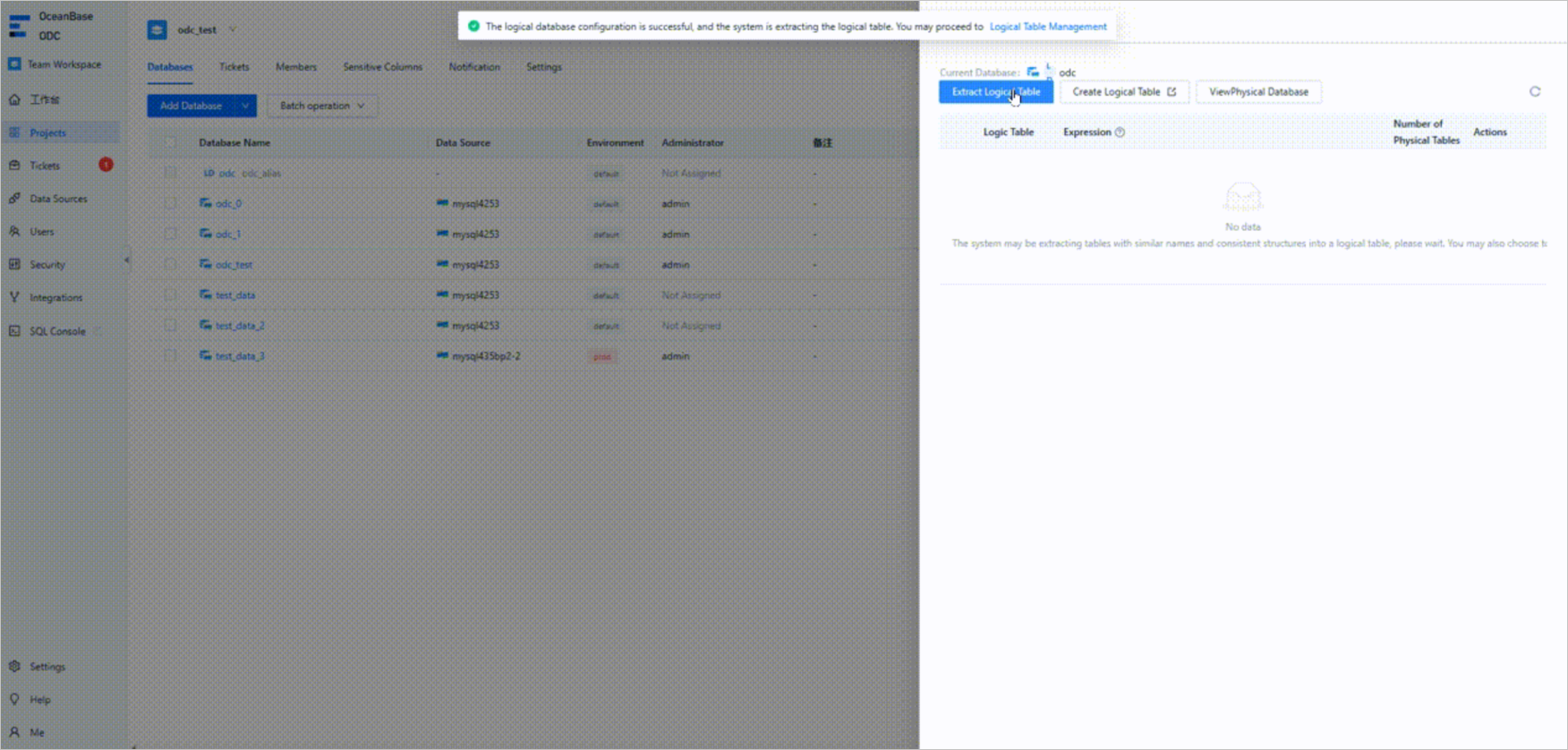
Demonstration:
1

With just two simple steps, ODC automatically identifies the logical table and generates the topology expression odc_[0-1].test_[0-10:2], where:

  • odc_[0-1] indicates tables are evenly distributed between odc_0 and odc_1

  • test_[0-10:2] shows the shard numbering uses 0 as lower bound, 10 as upper bound, with step 2 (0,2,4,6,8,10). Users can expand the logical table to view physical tables under each database and their expressions.

Create Sharded Databases/Tables with various topologies

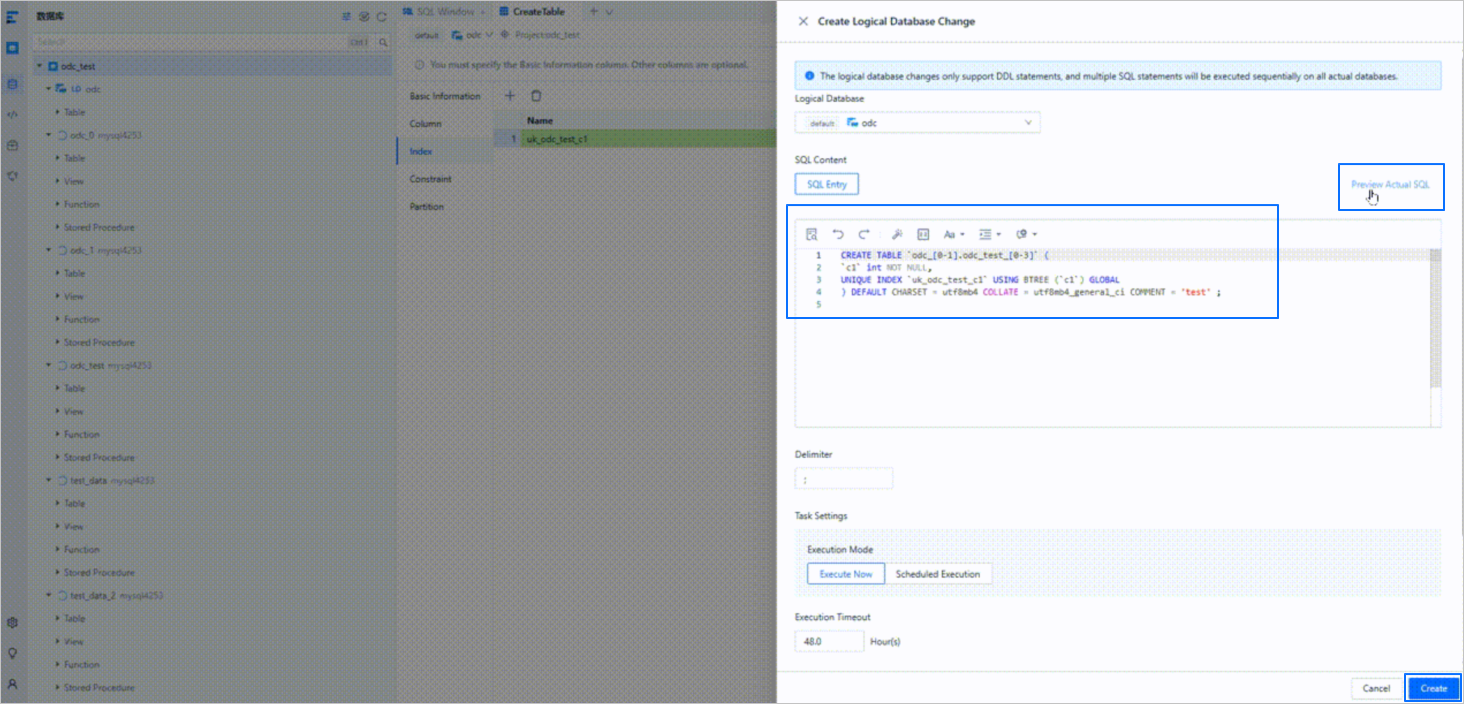
Logical tables can be treated like physical tables - users can view their structure in SQL window and create them similarly.

Prerequisites

The logical database has been configured.

Demonstration:

  • Creating a logical table

    2

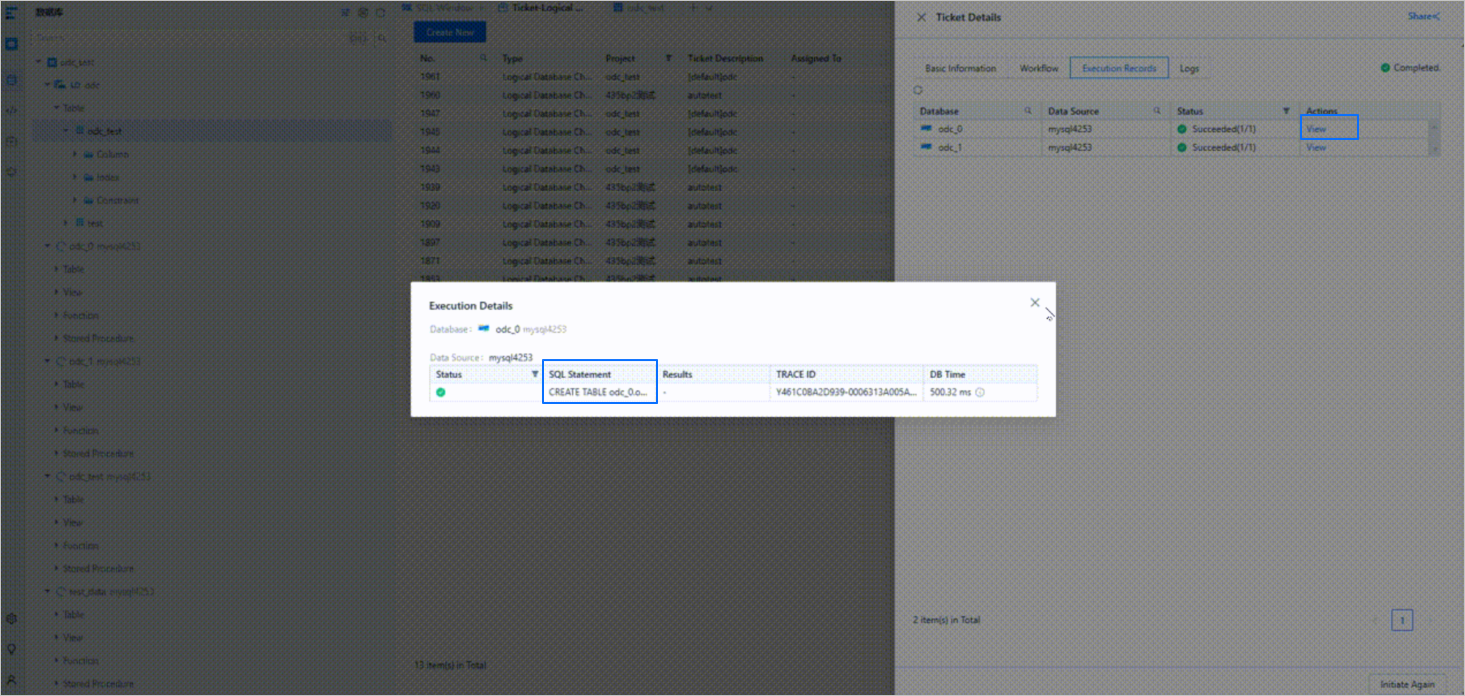
  • Viewing task results

    3

The only difference from creating physical tables is specifying the logical table expression to determine its topology distribution. ODC supports various sharding topology expressions for flexible logical table creation.

Logical table structure consistency inspection

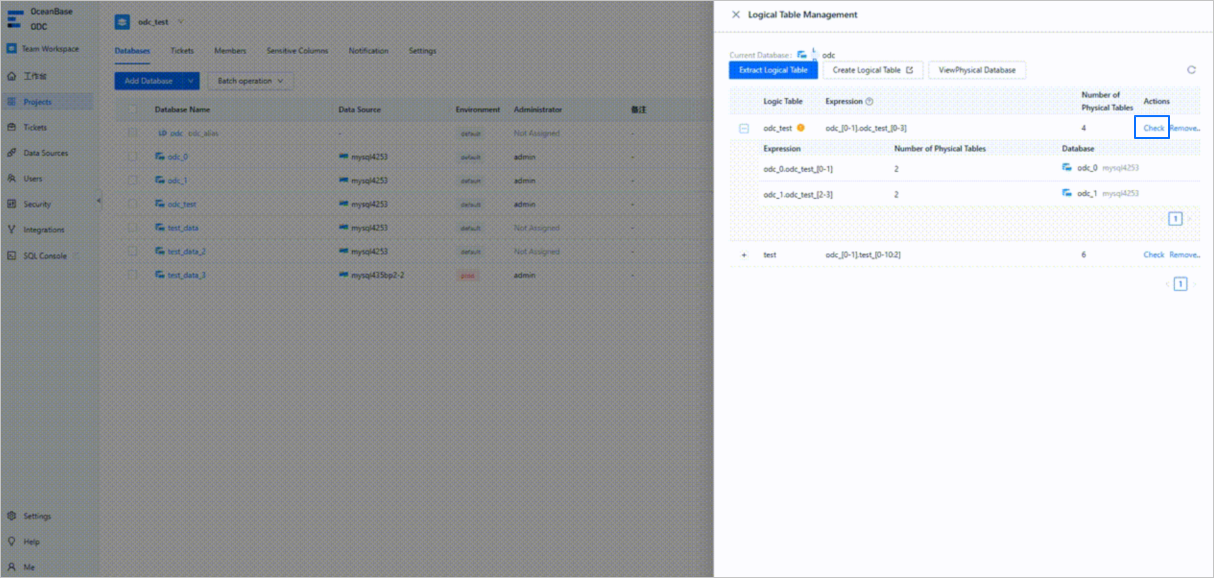
When physical shards develop structural inconsistencies, how can DBAs quickly identify them? ODC provides both scheduled background inspections and manual structural consistency checks.

Prerequisites

  • At t1: odc_test_0, odc_test_1, odc_test_2 and odc_test_3 have identical structure and are recognized as one logical table.
  • At t2: odc_test_0's structure changes (new column c2 added).
  • At t3: Click to check logical table structure.

Demonstration:
4

Smart grouping-based structural changes

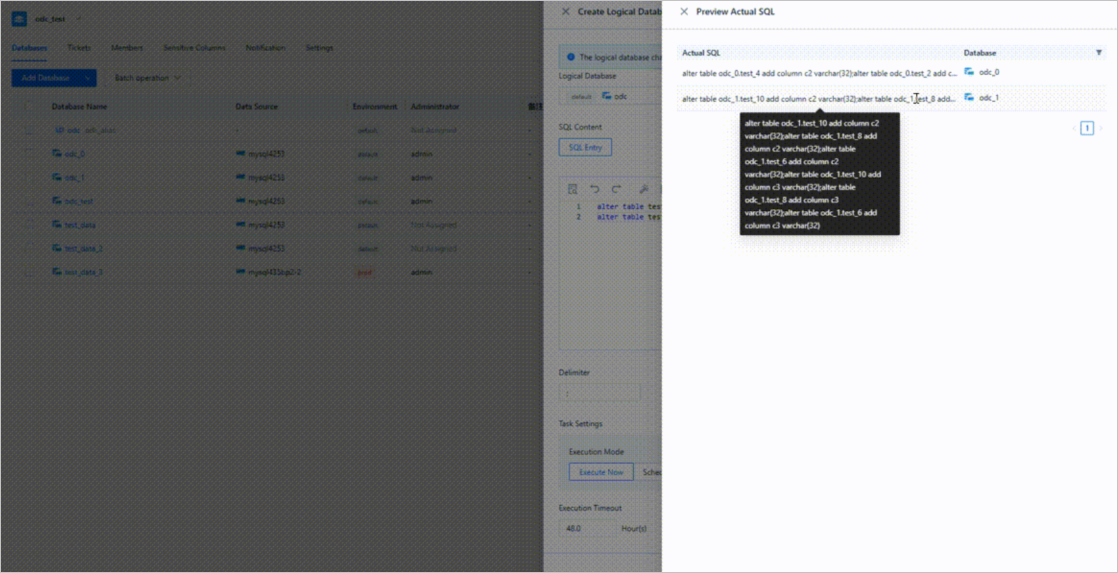
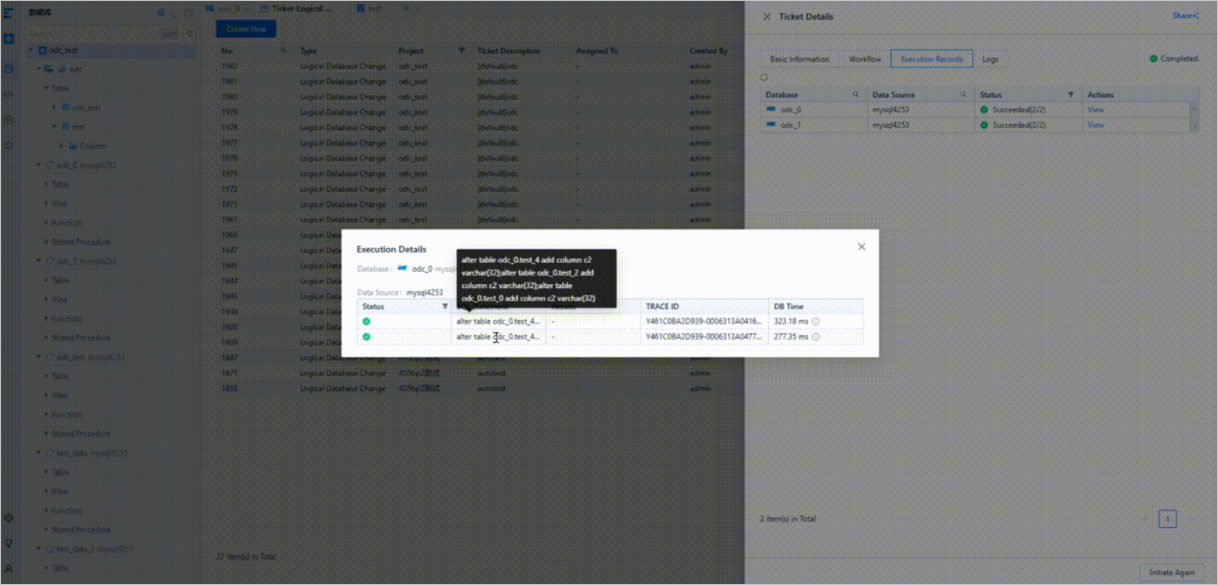
For logical table structural modifications, simply initiate a logical database change ticket like physical database changes. ODC will automatically apply changes to all physical shards based on the logical table's topology. The execution logic follows: Serial execution between multiple logical SQL statements, and smart parallel execution within single logical SQL. For MySQL, groups physical tables by their data source host, and executes serially within each group and in parallel between groups. For OceanBase, groups physical tables by their cluster, and executes serially within each group and in parallel between groups. This minimizes database pressure while maintaining structure consistency across physical shards.

Prerequisites

The logical table test already exists.

Demonstration:

  • Creating logical table change task

    5

  • Viewing logical table change task

    6

Emergency handling and exception recovery

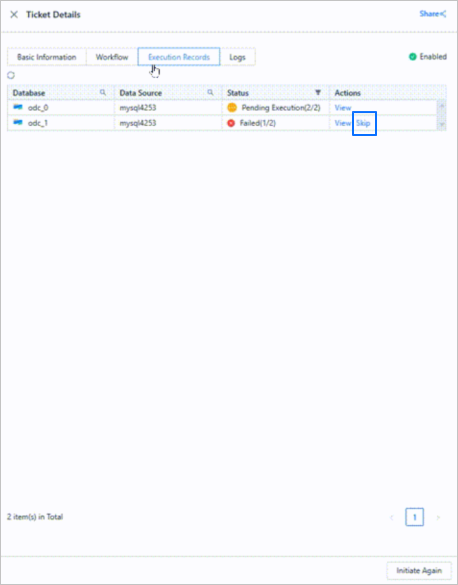
During logical database changes, maintaining structure consistency across physical databases is critical. While successful changes are straightforward, ODC provides special handling for partial failures. For SQL in execution, ODC supports termination. And for failed SQL, ODC will pause entire task for manual resolution before continuing. These features enable rapid emergency response during logical database changes.

Prerequisites

Column c2 already exists in the logical table test.

Demonstration:
1

Previous topic

Integration with ODC enterprise-level account system
Last

Next topic

Data masking and control practices
Next
What is on this page
Background information
Scenarios
Automated shard discovery
Create Sharded Databases/Tables with various topologies
Logical table structure consistency inspection
Smart grouping-based structural changes
Emergency handling and exception recovery