 Updated on 2026-11-20 10:28:59
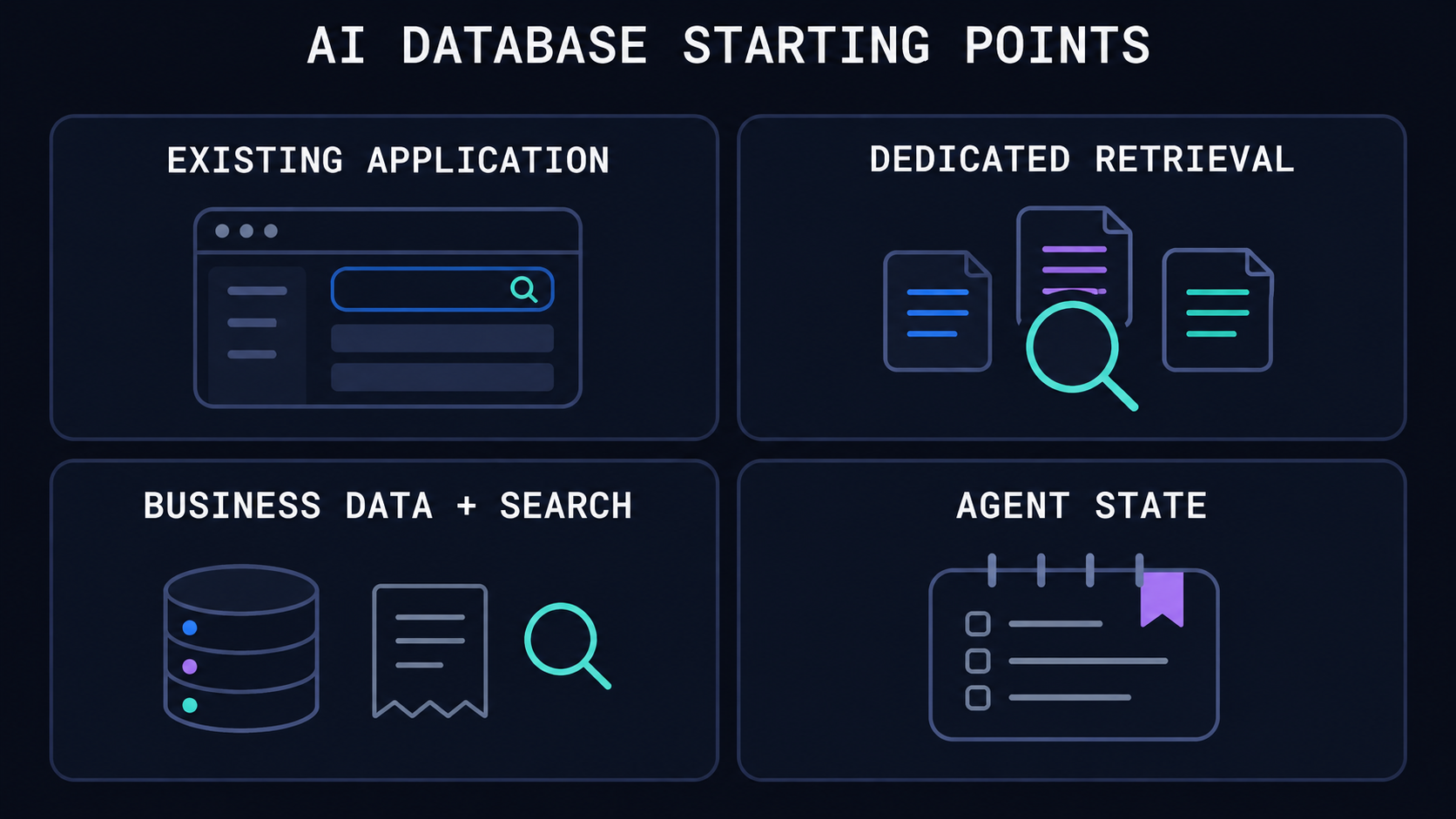
Teams building AI agents usually run into the same three database problems: giving an agent reliable memory across conversations, letting it find the right information by meaning rather than exact keywords, and keeping its growing set of records and decisions organized as it works. No single database wins every one of these jobs, so the right choice among Qdrant and its vector-database siblings, Redis, PostgreSQL with pgvector, and OceanBase AI Database depends on which job matters most for a given agent, and on how much of the surrounding workload that database also needs to carry. This article explains what each candidate actually does, the everyday agent problem it solves, and where it tends to fall short, so a team can match its own agent's requirements to a specific product rather than a generic label.
What Database Problems Does an AI Agent Actually Create?
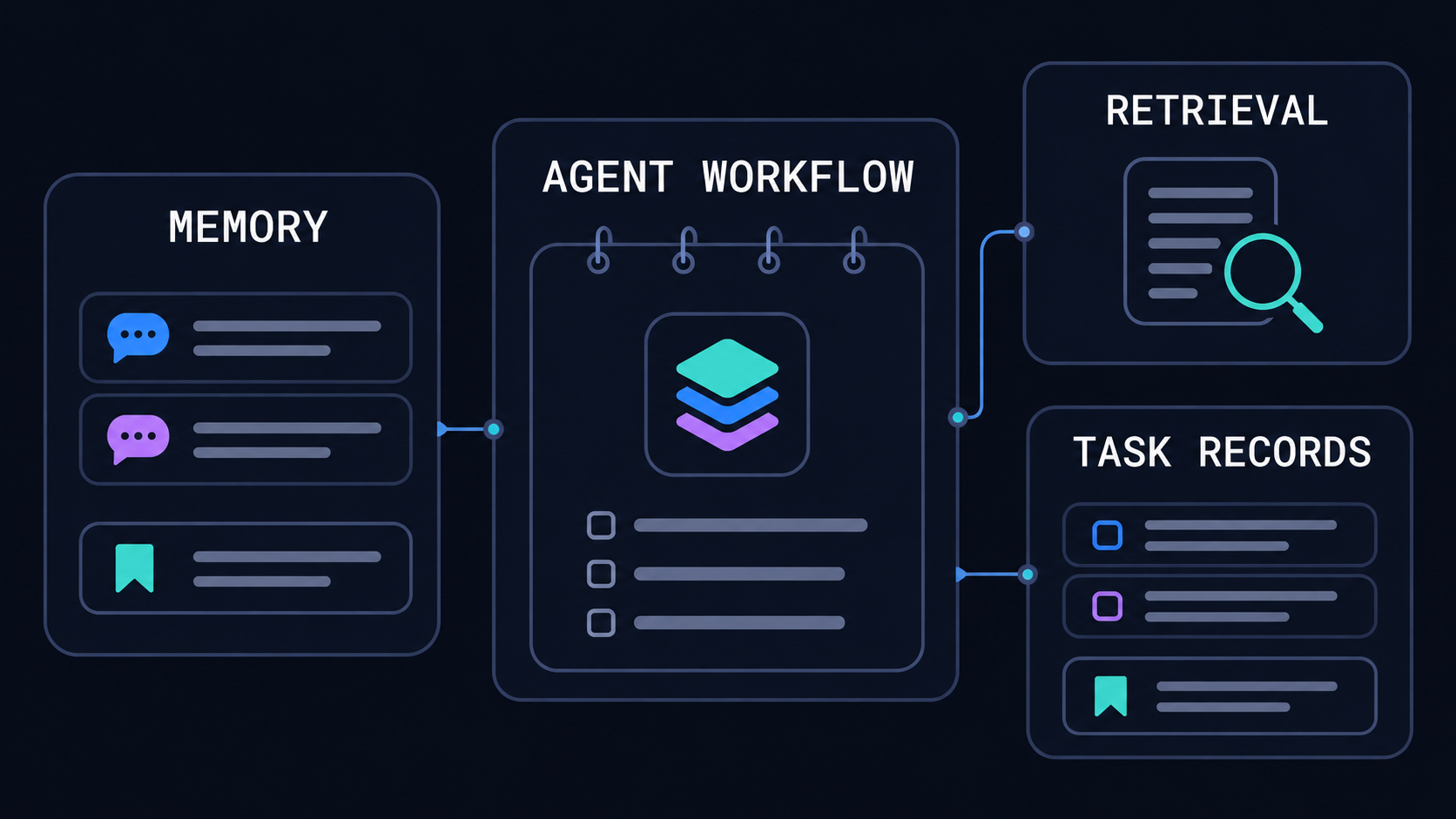
An AI agent is software that takes multiple steps on a user's behalf, and each of those steps tends to create its own database problem. Three show up repeatedly, whether the agent is a support assistant handling customer tickets, a knowledge agent answering questions from internal documentation, or a long-running task agent that manages a multi-step workflow over days or weeks.
The first is memory: an agent that forgets a user's stated preferences, earlier decisions, or the state of a long-running task between sessions forces the user to repeat themselves, which quickly becomes the most visible way an agent feels unreliable rather than helpful. One widely used agent framework, LangGraph, documents this as two related but separate needs: keeping track of where a single ongoing task currently stands, and separately retaining preferences or knowledge that need to carry over across different conversations. That split mirrors what most teams discover on their own: remembering the current task and remembering things across conversations are not automatically the same database problem.
The second is finding the right information. A support agent that answers from whatever ticket text happens to be nearby, rather than from a search that is actually grounded in the right prior ticket or document, produces answers that sound confident and are wrong, which is a harder failure to catch than an obvious error message. A knowledge agent has the same problem in a different shape: it needs to find the passage that actually answers a question even when the user's wording does not match the source text, which is what retrieval by meaning rather than exact keyword matching makes possible.
The third is keeping structured state and records organized: the tasks an agent has queued, the decisions it has already made, and the records tied to a particular user or workflow. A long-running task agent feels this most acutely, since it must reliably pick up where it left off across many separate sessions, let a team audit what it actually did, and avoid stepping on another concurrent run's data.
These three problems can be solved by one database or split across several, and the right split depends on how much of each job a particular agent actually does. A simple FAQ bot may only need retrieval. A long-running agent that manages a customer's account over weeks needs all three, which is why OceanBase AI Database exists as a single-product answer alongside more specialized options such as Qdrant, Redis, and PostgreSQL with pgvector.
Vector Databases for Retrieval: Qdrant, Pinecone, Weaviate, and Milvus
Qdrant, Pinecone, Weaviate, and Milvus are vector databases: they store pieces of text, images, or other content as numeric vectors and search for the nearest matches by meaning rather than by exact words. For the retrieval problem specifically, this is their whole job, and it is why they show up in almost every serious discussion of agent memory and retrieval-augmented generation.
Qdrant is a useful example of how a mature vector database handles a real query rather than a toy example. It can combine a meaning-based search with simple filters, such as which customer, which date range, or which document type, in a single step. For a support agent searching past tickets, this means it can look specifically within one customer's history for the passage that matches the current question, instead of searching the whole dataset and then checking afterward whether each result actually belongs to that customer, which would be slower and could miss a relevant result that fell just outside the initial broad search.
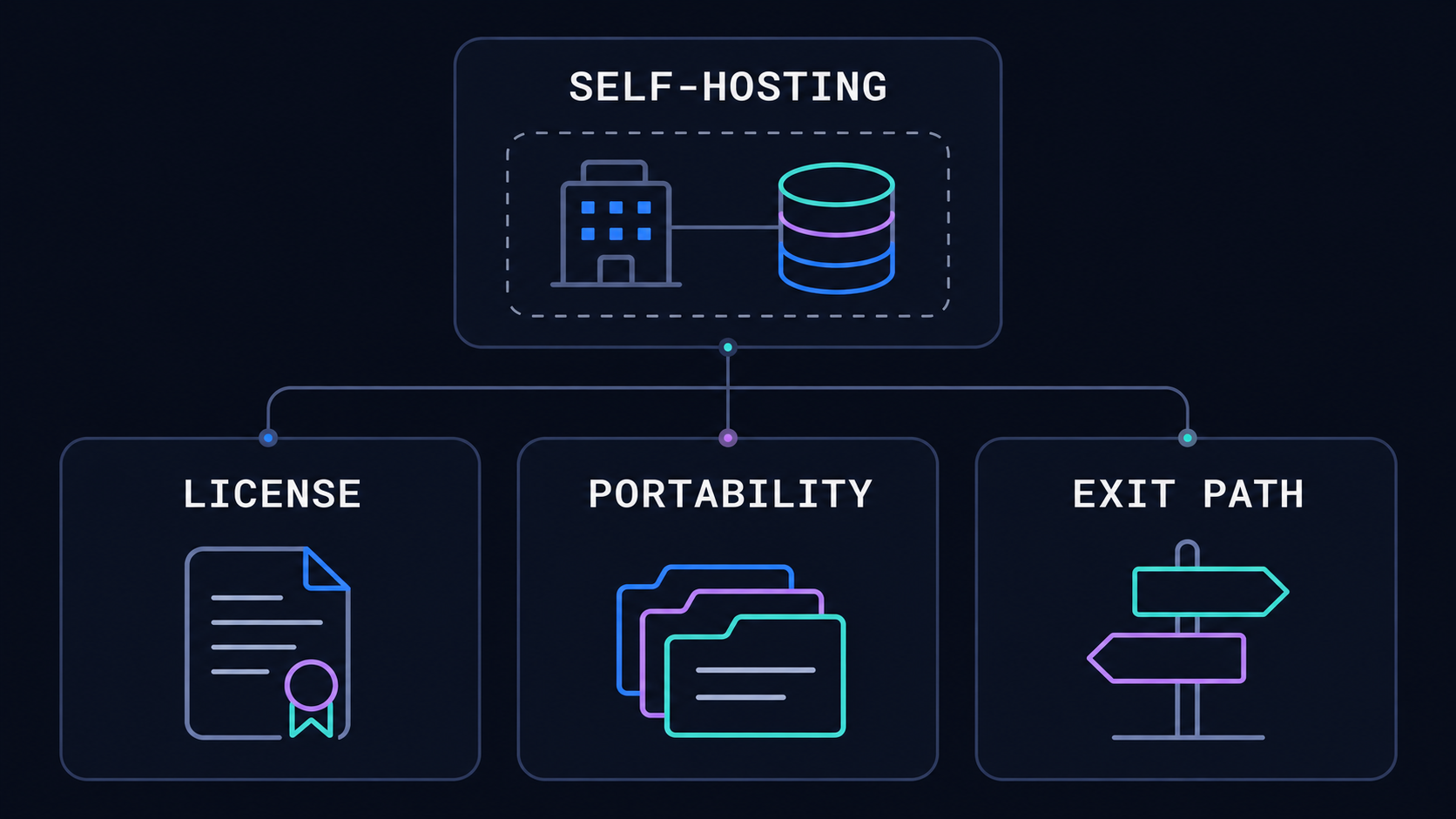
Deployment choice matters for a team evaluating these products as much as the search mechanism itself. Qdrant can be self-managed as open-source software, with no managed backup or upgrade service included by default, or used through a managed, hybrid, or private cloud service that takes on upgrades and backups as part of the offering. A small team without dedicated database operations staff typically gains more from the managed route than from the cost savings of self-hosting; a team that already runs its own infrastructure and wants full control over where vectors are stored may prefer the self-managed route despite the added operational work.
These products are built and optimized for retrieval by meaning rather than as a general system of record for structured business data such as account state, task queues, or audit trails; a team that also needs that kind of structured state typically pairs its vector database with a separate system designed for it, rather than asking the vector database to take on both jobs. A team whose agent's main job is semantic search, and that already has another system for structured records, often does not need more than one of these vector databases as a focused search layer; a team that needs both jobs from one product should look further down this list.
Redis: Fast State and Caching for an Active Conversation
Redis keeps its data in memory, which gives it very fast reads and writes compared to a disk-based database, and that speed is exactly what makes it well suited to the fast-moving part of an agent's workload: session state during an active conversation, and caching retrieval results so the agent does not repeat an expensive lookup it already made moments earlier.
Redis also supports atomic updates to a piece of shared state, which matters for an agent that needs to update a counter, a session flag, or a short queue safely even when multiple requests might arrive close together. That atomicity has a clear boundary, though: it protects the update itself, not any external action the agent already triggered as part of a larger step. An agent that calls an external payment or messaging API needs its own compensating logic for that side effect; no database update, Redis or otherwise, undoes it automatically.
Whether an agent can lose Redis data on a restart depends entirely on how a deployment is configured: a team can run Redis purely as an in-memory cache with no persistence, which is fine for data the agent can regenerate on demand, or configure it to save data to disk so it survives a restart. A team should decide deliberately which of an agent's data falls into each category, rather than assuming Redis either always loses data or always keeps it.
Because of this profile, a team can pair Redis with another system that keeps an agent's longer-term, structured records, using Redis for the fast-moving part of the workload, or configure Redis's own persistence if that fits what the agent needs to keep, depending on how the deployment is designed.
PostgreSQL With pgvector: Agent Memory Inside a Database Teams Already Trust
Teams already running PostgreSQL can add the pgvector extension to search by meaning in the same database that already holds an agent's structured records, instead of introducing an entirely new system just for retrieval. This matters more than it sounds: the surrounding table keeps full PostgreSQL behavior, including ACID transactions, joins against other application tables, and point-in-time recovery, so a user's profile, their permissions, and the vectors representing their documents or conversation history can live in the same table and the same update, with the same backup and recovery story a team already operates for the rest of its data.
In a multi-tenant application, a team should plan its schema so that one customer's data volume does not affect the search quality another customer sees, which is a normal design decision for a team already comfortable operating PostgreSQL, not a reason to avoid the extension altogether.
This combination suits a team whose agent's structured state and retrieval needs are modest enough to fit comfortably in PostgreSQL, and that values keeping one database, one backup process, and one operations team rather than adding a dedicated vector database purely for the search half of the problem.
OceanBase AI Database: Agent Memory, Retrieval, and Structured Data in One Coordinated Route
OceanBase AI Database is OceanBase's purpose-built database for AI and agent workloads, built to keep an agent's structured business records, text, JSON documents, and vector embeddings inside one database's transactional semantics. Instead of asking a team to copy and reconcile the same information across a separate relational database, search engine, and vector store, an agent's most frequently written and searched data can live and stay consistent in one place. An ordinary OceanBase deployment used for other workloads does not automatically carry this same set of AI-focused capabilities, and that consolidation does not mean a given agent project will never need another system; it means the data an agent relies on most often has one coordinated home instead of several.
For example, a support team building a knowledge-retrieval agent could combine a semantic search over past tickets with a keyword match and a business filter, such as which product line or account tier, in a single query, instead of running separate lookups against a vector store and a search engine and merging the results in application code. The same query can also pull in the structured facts about that customer's account, so the agent's answer is grounded in the actual ticket history and the account record together, rather than in a search result that has to be cross-checked against a separate system afterward.
A longer-running agent, such as one that works a customer case over several days, can keep its short-term task state, its longer-term memory, and the business facts it has gathered in the same data layer, with a team configuring that data into its own scope for each customer or agent so it is not mixed in with another's. That continuity is what lets the agent pick up a case on day three with the same context it had on day one, instead of starting the search for relevant history over again. The database can also call connected AI models to process text, generate embeddings, or rerank search results as part of an ordinary query, which saves an application from having to manage that step, send the data out, and write the result back itself.
For a team that wants to try a risky change, such as a new scoring rule or a what-if data migration, on a copy of an agent's data, OceanBase AI Database includes a data-branching feature that the product currently labels experimental: it creates an isolated copy of the data for that kind of trial, without touching the original, and it works at the data level only, so it does not undo a message or a payment the agent already sent while exploring that copy. Teams whose agent memory keeps growing, or that build up a large amount of older history, can also scale compute and storage independently and let less-active data move to lower-cost storage over time, which helps keep that growth from becoming an open-ended cost problem.
Comparing the Candidates Side by Side
Candidate | Strongest at | Fits best when |
|---|---|---|
| Qdrant and other vector databases | Finding the right information by meaning | Retrieval is the main job and structured state already lives elsewhere |
| Redis | Fast, short-term state and caching | An active conversation needs low-latency state, paired with a durable system of record |
| PostgreSQL with pgvector | Adding memory to an existing relational database | A team already runs PostgreSQL and wants one database for structured state and search |
| OceanBase AI Database | Memory, retrieval, and structured state together, plus in-database AI functions | An agent needs all three jobs from one coordinated database route, or wants model calls handled close to the data |
A comparison like this cannot replace testing an agent's actual workload against a candidate, but it narrows the field to the one or two products worth that testing effort, instead of leaving a team to evaluate all four against every possible requirement.
Which Database Fits Your AI Agent?
If an agent's main job is finding the right passage or document by meaning, and its structured state lives elsewhere already, a vector database such as Qdrant, Pinecone, Weaviate, or Milvus is a natural starting point, with the deployment route, self-managed versus managed, chosen based on whether the team wants to operate that infrastructure itself. If the priority is low-latency state for an active conversation, Redis fits that role well; a team can pair it with another system for durable, longer-term records, or rely on Redis's own persistence configuration, depending on how the deployment is designed. A team already running PostgreSQL that wants to avoid introducing a second database purely for search can add pgvector and keep structured agent data and retrieval in one familiar system, accepting the multi-tenant schema planning as a normal design decision rather than a blocker. For an agent that writes memory continuously, needs to search it in the same place, and also keeps structured records of what it has done, OceanBase AI Database's combination of transactional data storage, hybrid retrieval, and in-database AI functions is built for exactly that combination of requirements. A single agent project can also combine more than one of these, for example using a database for memory and search together with a lighter caching layer in front of it, rather than treating this as a single irreversible choice made once for the whole system.