 Updated on 2026-11-20 10:28:57
When an Oracle, MySQL, or PostgreSQL system reaches its limits, on transaction volume, availability, or scaling, the realistic alternative is rarely a blank-slate rewrite: years of stored procedures, application logic, and integration work are already built around that system's SQL dialect and behavior. OceanBase, YugabyteDB, and CockroachDB each let a team keep a familiar SQL dialect while moving to a distributed architecture, but they start from different ecosystems and remove different amounts of rework: OceanBase is built around Oracle- and MySQL-compatible modes, while YugabyteDB and CockroachDB are built around PostgreSQL compatibility. This article explains what each database is, the kind of business problem it solves, and which starting point it fits best.
What a Rewrite Really Costs When an RDBMS Reaches Its Limits
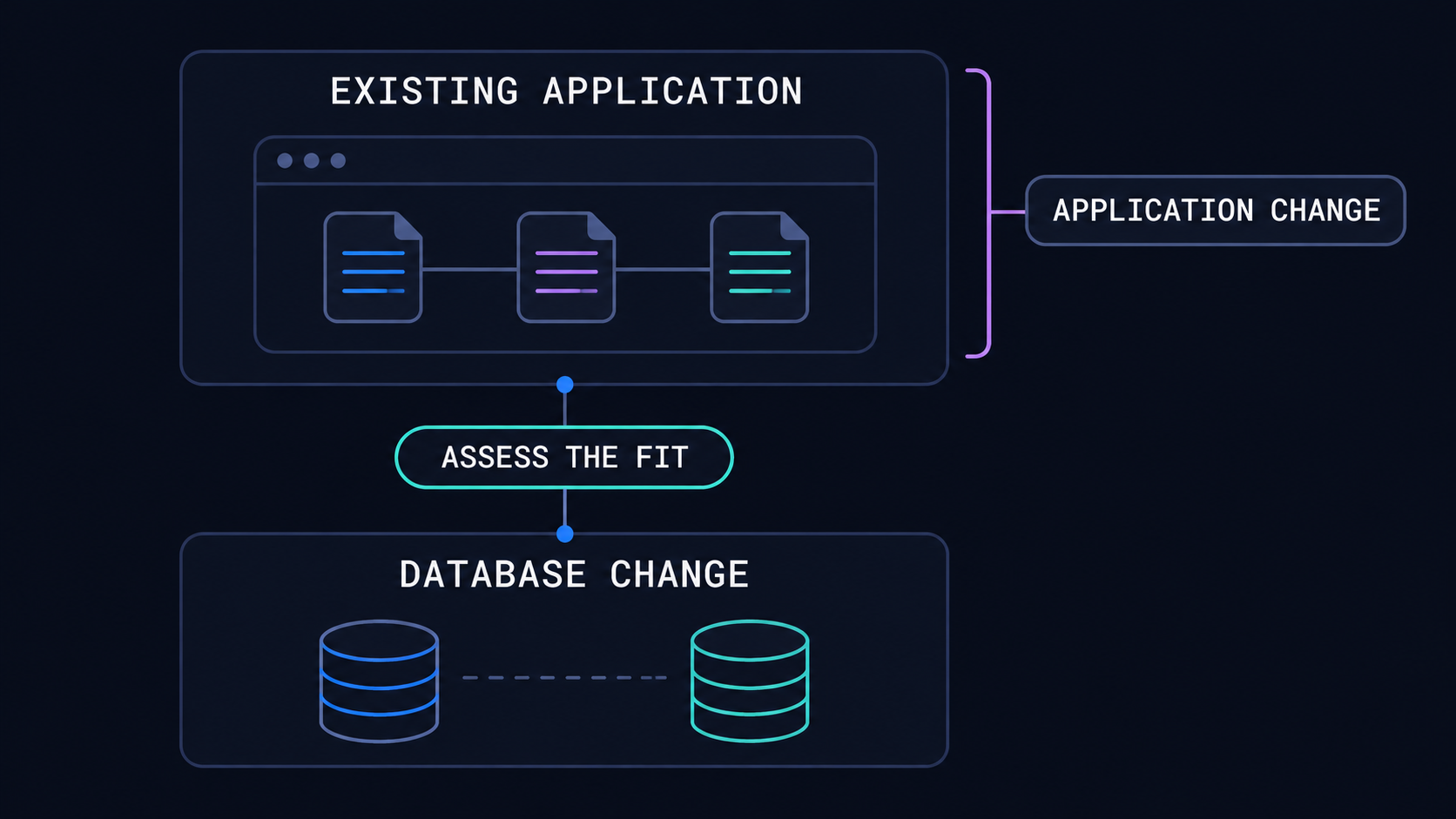
A traditional relational database can run into several different ceilings at once: a single primary node runs out of write capacity, a maintenance window no longer covers the time an upgrade or failover takes, or a growing number of regions and customers needs data placed and recovered without one data center becoming a single point of failure. Replacing the database itself is a known, bounded project. Replacing it and rewriting the application that depends on it is a much larger one, because years of stored procedures, SQL dialect details, transaction-handling assumptions, batch jobs, and third-party integrations are usually built around the specifics of that one system.
Getting this choice wrong is expensive in a specific way: a database migration that turns into an application rewrite can take a team off feature work for a year or more, multiplies the testing and validation effort, and raises the chance that a business rule buried in old code gets missed. Teams that have already invested in Oracle, MySQL, or PostgreSQL applications are usually not looking for the single best distributed database in the abstract; they are looking for one that can absorb growth and failure scenarios while asking their application to change as little as possible.
OceanBase, YugabyteDB, and CockroachDB are considered here because each is built to minimize a different slice of that rewrite by speaking close to an existing SQL dialect, rather than asking an application to adopt an unrelated query language or data model. This is a comparison for teams already standardized on Oracle, MySQL, or PostgreSQL; it is not an exhaustive list of every distributed database on the market, and other products may be worth evaluating depending on a team's existing ecosystem.
OceanBase: Compatibility Built for Oracle and MySQL Applications
OceanBase is a distributed relational database. Its Enterprise edition can run in an Oracle-compatible mode or a MySQL-compatible mode, so an application written for either system can generally keep using the SQL dialect it already relies on. OceanBase also provides its own migration tooling to help carry database objects, such as tables and stored procedures, over to the new environment. That tooling reduces how much of a large schema a team has to recreate by hand, though some more complex objects still need individual review rather than a fully automatic carry-over.
OceanBase's value in this kind of move goes beyond speaking a familiar SQL dialect. Because it is natively distributed, rather than relying on application code to split data across separate database instances, it gives a growing MySQL or Oracle estate a way to add capacity without the team designing and maintaining its own sharding scheme. The same architecture lets several smaller databases be consolidated onto shared infrastructure, which matters for organizations running many applications: instead of patching, monitoring, and backing up a separate database for each one, a platform team can manage capacity for a group of applications together, while still keeping a critical application on its own dedicated resources if its recovery or security needs call for it. For a business weighing a migration, this is the difference between only swapping one database engine for another and gaining a platform that can keep absorbing growth and new applications afterward.
This kind of fit has already been tested in public. Sichuan Bank ran a structured, months-long evaluation before selecting a new database: it compared multiple vendors, piloted a shortlist of them hands-on, and built a large internal test suite covering its most demanding transaction patterns before making a decision. OceanBase passed that evaluation's load testing without the bank needing to modify its application code, and the bank's own technical team pointed to OceanBase's native distributed architecture, as opposed to a middleware-based distributed layer, as part of its reasoning. That result reflects this one bank's own evaluation process and proof-of-concept scope, not a guarantee that every Oracle or MySQL application will need zero code changes.
A separate case from OceanBase's own published materials describes a large insurance institution whose core systems were built on Oracle using ProC and Tuxedo, a combination that represented a large amount of long-standing application code. According to this account, the institution migrated close to 100 business systems and nearly 800 online Oracle databases to OceanBase over roughly a year, with no instance of needing to roll back during the process, and ProC and Tuxedo compatibility meant the institution did not need to rewrite that older application code as part of the move. The institution still planned the migration as a staged project with its own application adaptation and testing phase, rather than treating compatibility as a reason to skip validation. As with the Sichuan Bank case, this is a vendor-published account of one institution's project, not an independently audited benchmark or a promise of the same result for every Oracle application.
Put together, OceanBase fits best when an application is already built around Oracle or MySQL, the team wants to preserve that investment rather than replace it, and the business also needs room to grow transaction volume or consolidate several databases onto shared infrastructure without taking on a full rewrite.
YugabyteDB: A PostgreSQL-Compatible Route for PostgreSQL Teams
YugabyteDB is a distributed SQL database built around YSQL, a PostgreSQL-compatible SQL interface. YugabyteDB's own documentation describes YSQL as built directly from the PostgreSQL codebase, which is why an application already written for PostgreSQL can generally keep its existing SQL, drivers, and the PostgreSQL tools it already uses. The same documentation also notes that some PostgreSQL features tied specifically to a single-node, monolithic architecture may not be supported in a distributed engine, so a PostgreSQL application is not automatically guaranteed to move without any changes, even though most of its SQL surface should carry over.
This makes YugabyteDB most relevant to a team that is already standardized on PostgreSQL and wants to add horizontal scaling and built-in replication without moving off that ecosystem, for example a PostgreSQL-based application that has outgrown a single primary node or needs data available across multiple sites.
For a team coming from Oracle or MySQL, YugabyteDB is a less direct fit than it is for a PostgreSQL team. YugabyteDB's own migration tool, Voyager, is built primarily around PostgreSQL sources, and its previously available offline migration paths for Oracle and MySQL have since been deprecated, with support for both ending in October 2026. That leaves a team migrating from Oracle or MySQL without a current vendor-supported path for converting its schema into YugabyteDB, so it should expect to plan for a more substantial, largely self-managed conversion effort than a PostgreSQL team would face.
CockroachDB: PostgreSQL Compatibility, With More Adjustment Expected From Oracle Applications
CockroachDB is a distributed SQL database that is also PostgreSQL-compatible, which lets applications and their usual object-relational mapping tools connect to it much as they would connect to PostgreSQL. Like YugabyteDB, this makes it a natural fit for a team already building on PostgreSQL that wants a database designed from the ground up to distribute data and tolerate failures across nodes.
An application coming from Oracle rather than PostgreSQL should expect more hands-on adjustment, because CockroachDB's compatibility is built around the PostgreSQL dialect rather than Oracle's. In practice, this means some of the application's existing business logic and transaction-handling code, not just its SQL syntax, needs to be reviewed and adjusted rather than simply reconnected to a new database. A team that has spent years building and tuning an Oracle-based application is effectively trading a known, already-paid-for set of behaviors for data distribution and horizontal scale, so this path tends to make the most sense when outgrowing a single Oracle instance is a bigger business problem than the cost of that adjustment, rather than when the team's main goal is to avoid touching the application at all.
CockroachDB therefore fits best when an application is already a PostgreSQL application; an Oracle-based application can still move to CockroachDB, but the project should budget for the kind of business-logic and transaction-handling review described above rather than expecting a drop-in replacement.
Which Route Fits Which Situation
The starting points below summarize the fit described in this article; they are not an exhaustive feature comparison.
Application's current database | Best-fitting candidate | Main adjustment to plan for |
|---|---|---|
| Oracle or MySQL, staying on that ecosystem | OceanBase | A set of complex schema objects needs individual review, and the project should still plan a cutover and fallback process |
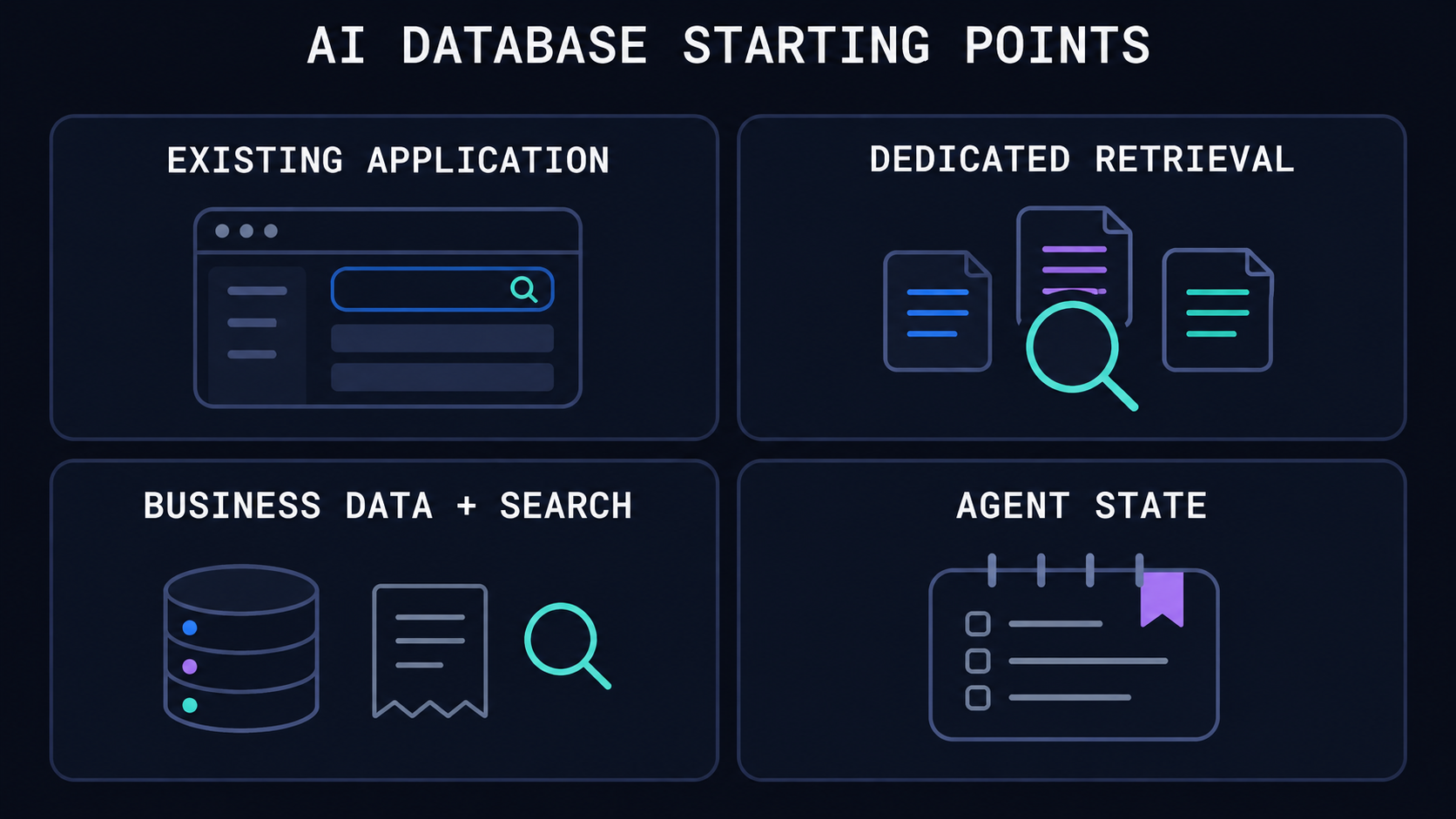
| PostgreSQL, adding distributed scale | YugabyteDB or CockroachDB | Most SQL should carry over, but test the specific extensions and features the application depends on |
| Oracle, moving to a PostgreSQL-compatible database | YugabyteDB or CockroachDB | Expect a more substantial, largely self-managed conversion that touches business logic and transaction handling, not just SQL syntax |
An application that is already built around Oracle or MySQL and wants to keep that investment while gaining distributed scale and the option to consolidate other databases onto shared infrastructure has OceanBase as the candidate built specifically for that combination. An application that is already a PostgreSQL application can move to either YugabyteDB or CockroachDB with comparatively little SQL-level rework, and the choice between them then comes down to other factors, such as each product's own deployment model, support terms, and failure-handling behavior, which fall outside the scope of this comparison. An Oracle or MySQL application considering YugabyteDB or CockroachDB should budget for materially more conversion work than it would with OceanBase, since neither product is built primarily around those two source ecosystems.