Background information
AI tools are evolving rapidly, from graphical solutions like Cursor, Windsurf, and Trae to command-line options such as Claude Code, Gemini CLI, and Qwen Code. Empowered by Agent-based frameworks, these tools are remarkably capable. However, a key limitation remains: AI tools cannot directly access databases, leaving a gap between data and analysis. The MCP protocol bridges this gap. By leveraging the MCP protocol, OceanBase MCP Server enables AI tools to interact directly with databases and retrieve data seamlessly.
Traditionally, data analysis tasks—such as user analytics, product analysis, order tracking, and user behavior analysis—require developers to build backend systems for data retrieval and frontend interfaces for data visualization. Even with BI tools, some familiarity with SQL is often necessary. While data can be displayed, understanding the underlying logic or making business decisions based on that data still depends on the expertise of data analysts.
The combination of AI tools, MCP, and large language models (LLMs) is transforming the way data analysis is performed. Analysts no longer need to rely on developers or have SQL knowledge. They can simply describe their requirements to AI tools and instantly receive the results they need—complete with attractive charts and initial data insights.
Feature architecture
Core toolkits
OceanBase MCP Server provides standardized interfaces for AI tools to directly call database features:
Tool |
Description |
|---|---|
execute_sql |
Executes any SQL statement (SELECT/INSERT/UPDATE/DELETE/DDL). |
get_current_tenant |
Retrieves the name of the current tenant. |
get_all_server_nodes |
Retrieves cluster node information (only for the sys tenant). |
get_resource_capacity |
Queries cluster resource capacity (only for the sys tenant). |
get_ob_ash_report |
Retrieves the OceanBase Active Session History (ASH) report for performance diagnostics. |
get_current_time |
Returns the current time of the OceanBase cluster. |
search_oceanbase_document |
Searches the OceanBase official documentation (experimental feature). |
oceanbase_text_search |
Performs full-text search in OceanBase database tables to find documents. |
oceanbase_vector_search |
Executes vector similarity search in OceanBase database tables. |
oceanbase_hybrid_search |
Performs hybrid search, combining relational condition filtering and vector search. |
ob_memory_query |
Performs semantic search in the AI memory system to retrieve historical conversation records. (AI Memory System tool) |
ob_memory_insert |
Automatically captures and stores important conversation content to build a knowledge base. (AI Memory System tool) |
ob_memory_delete |
Deletes outdated or redundant conversation memories. (AI Memory System tool) |
ob_memory_update |
Updates or evolves memory content based on new information. (AI Memory System tool) |
Resource endpoints
Resource interfaces exposed through the MCP protocol for AI tools to directly call:
Resource path |
Description |
|---|---|
oceanbase://tables |
Lists all tables in the database. |
oceanbase://sample/{table} |
Retrieves sample data (first 100 rows) for a specified table. Supports dynamic replacement of {table} with the table name. |
Note
For the latest documentation on OceanBase MCP Server, see OceanBase MCP Server.
Prerequisites
You have installed Cursor or another tool that supports the MCP protocol (such as Windsurf or Qwen Code).
You have deployed an OceanBase cluster and created a MySQL-compatible user tenant. The user connecting to the user tenant must have the
CREATE,INSERT,DROP, andSELECTprivileges on the target database.- For more information about deploying an OceanBase cluster, see Deployment overview.
- For more information about creating a user tenant, see Create a tenant.
- For more information about user privileges, see Privilege types in MySQL-compatible mode.
You have installed a Python environment (version 3.10 to 3.12).
- You can download the Python installation package from the Python official website.
Procedure
Step 1: Obtain the database connection information
Contact the OceanBase Database deployment personnel or administrator to obtain the database connection string. For example:
obclient -h$host -P$port -u$user_name -p$password -D$database_name
Parameter description:
$host: The IP address for connecting to OceanBase Database. For connection through OceanBase Database Proxy (ODP), use the ODP address. For direct connection, use the IP address of an OBServer node.$port: The port for connecting to OceanBase Database. For connection through ODP, the default value is2883, which can be customized when ODP is deployed. For direct connection, the default value is2881, which can be customized when OceanBase Database is deployed.$database_name: The name of the database to be accessed.Notice
The user connecting to the tenant must have the
CREATE,INSERT,DROP, andSELECTprivileges on the database. For more information about user privileges, see Privilege types in MySQL-compatible mode.$user_name: The tenant connection account. For connection through ODP, the format isusername@tenant name#cluster nameorcluster name:tenant name:username. For direct connection, the format isusername@tenant name.$password: The account password.
For more information about the connection string, see Connect to an OceanBase tenant by using OBClient.
Here is an example:
obclient -hxxx.xxx.xxx.xxx -P2881 -utest_user001@mysql001 -p****** -Dtest
Step 2: Install Python dependencies
Environment preparation
Install the uv package manager.
On macOS/Linux, run the following command:
curl -LsSf https://astral.sh/uv/install.sh | shOn Windows, run the following command:
irm https://astral.sh/uv/install.ps1 | iexOr use pip to install the uv package manager:
pip install uv
Verify whether uv is installed successfully:
uv --version
Install OceanBase MCP Server
Choose a directory and run the following command to create a virtual environment:
uv venvRun the following command to activate the virtual environment:
source .venv/bin/activateRun the following command to install OceanBase MCP Server:
uv pip install oceanbase-mcp
Step 3: Configure the MCP Server environment
Create a
.envfile:cat > .env <<EOF OB_HOST=127.0.0.1 OB_PORT=2881 OB_USER=test_user001@mysql001 # Example: MySQL-compatible tenant user OB_PASSWORD=your_password OB_DATABASE=test EOFStart the MCP Server:
uv run oceanbase_mcp_server \ --transport sse \ # Supports stdio/streamable-http/sse modes --host 0.0.0.0 \ # Allows external access; can be changed to 127.0.0.1 for local access only --port 8000 # Custom port (adjust subsequent configuration if using e.g. 8001)
Step 4: Configure Cursor to connect to the MCP Server
Open the Cursor settings page: Click the gear icon in the upper-right corner → Select MCP → Click New MCP Server.
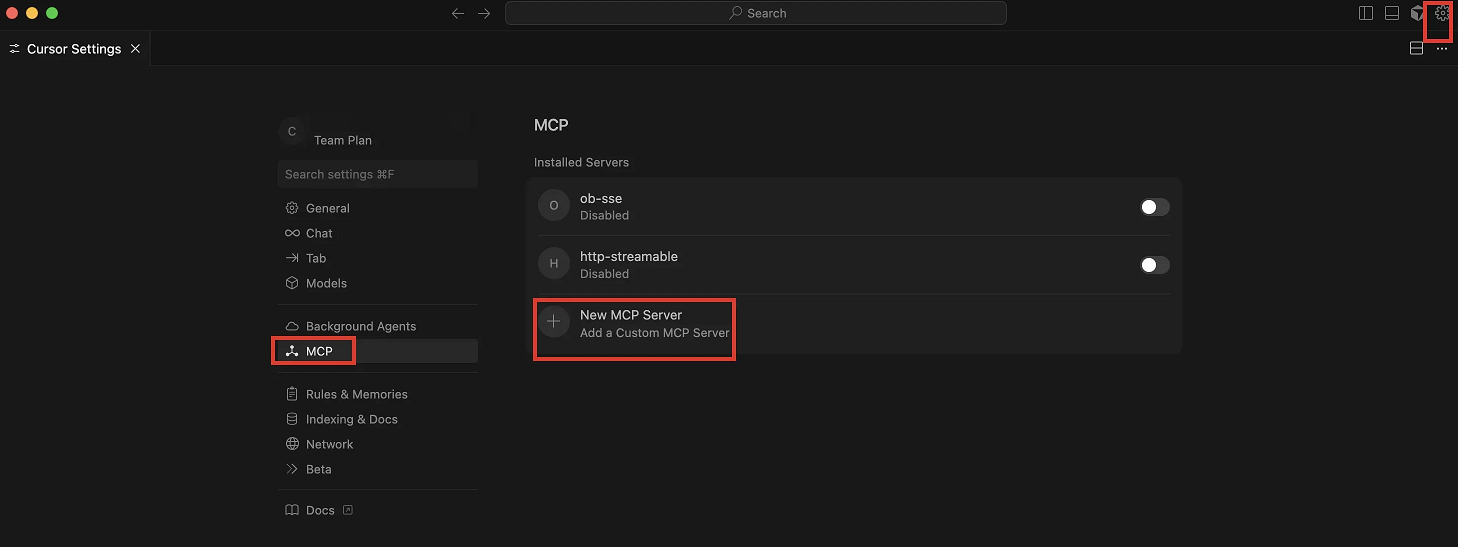
Edit the
mcp.jsonconfiguration:{ "mcpServers": { "ob-sse": { "autoApprove": [], "disabled": false, # Must be set to false to enable the service "timeout": 60, "type": "sse", "url": "http://127.0.0.1:8000/sse" # Must match the port from Step 3 } } }Verify the connection.
After saving, return to the MCP page, where you can see the newly added MCP.
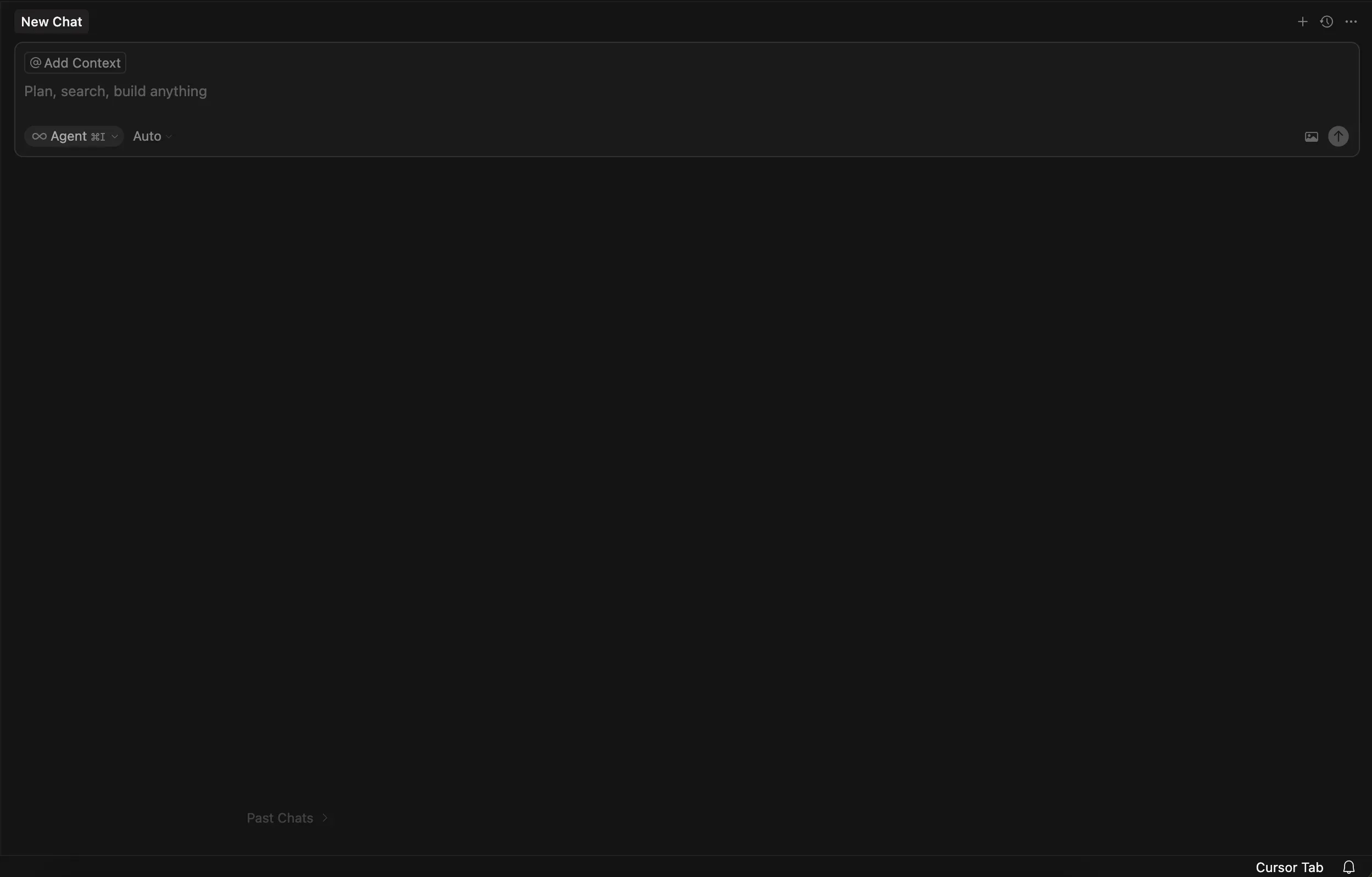
After adding, when you ask questions in the Chat window, Cursor will automatically use the MCP tools.
Quick start examples
Once you set up SeekDB and the MCP Server, you can quickly try out data analysis capabilities. The following examples use the Online Retail Dataset and Cursor to demonstrate how AI tools can seamlessly work with the OceanBase MCP Server for common analytics tasks.
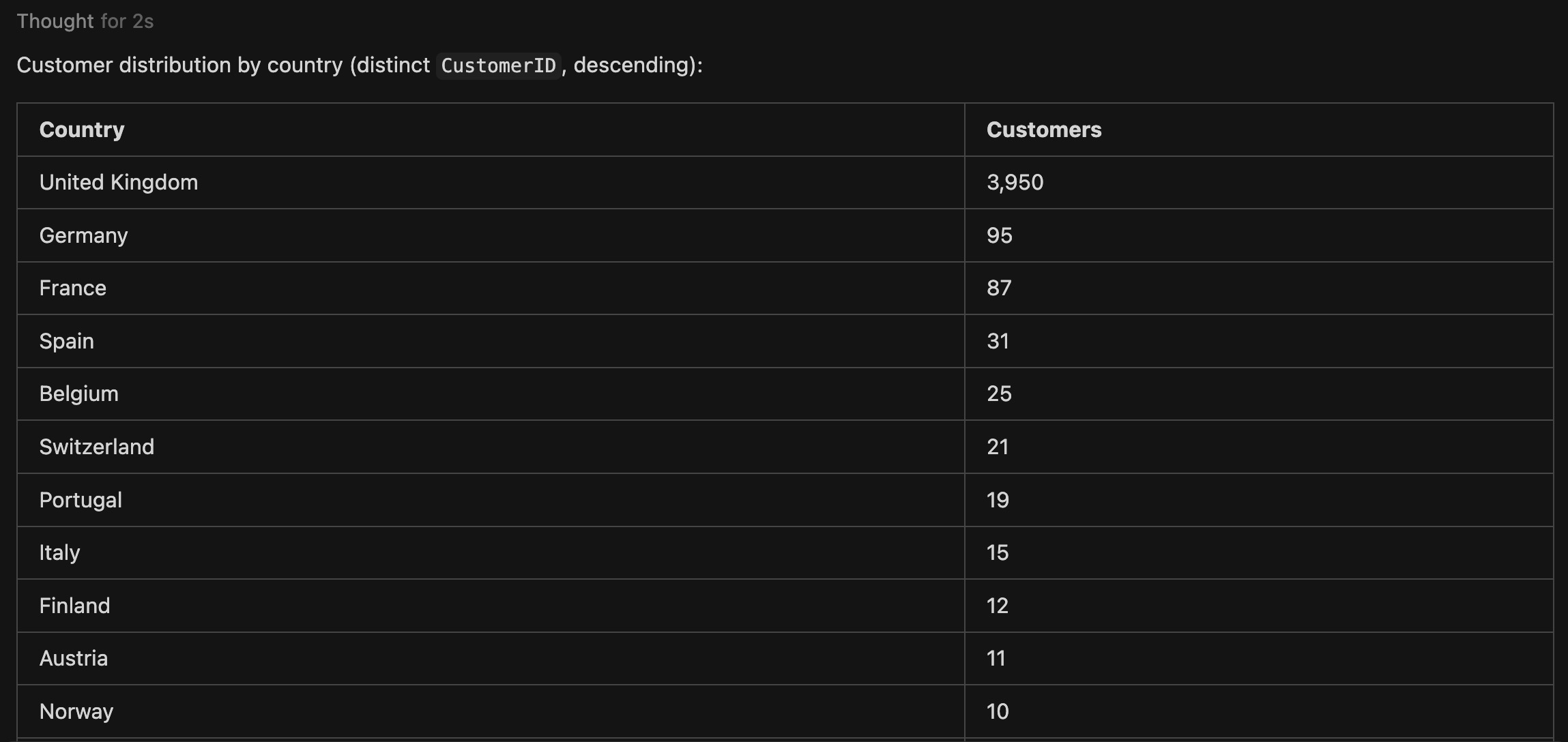
Customer distribution analysis
Instruction input:
Analyze the customer data and show the distribution of customers by country.Cursor execution process:
Cursor calls
execute_sqlto execute the aggregation query:SELECT Country, COUNT(DISTINCT CustomerID) AS customer_count FROM dataanalysis_english.invoice_items WHERE CustomerID IS NOT NULL AND Country IS NOT NULL GROUP BY Country ORDER BY customer_count DESC;Cursor automatically generates a structured analysis result.
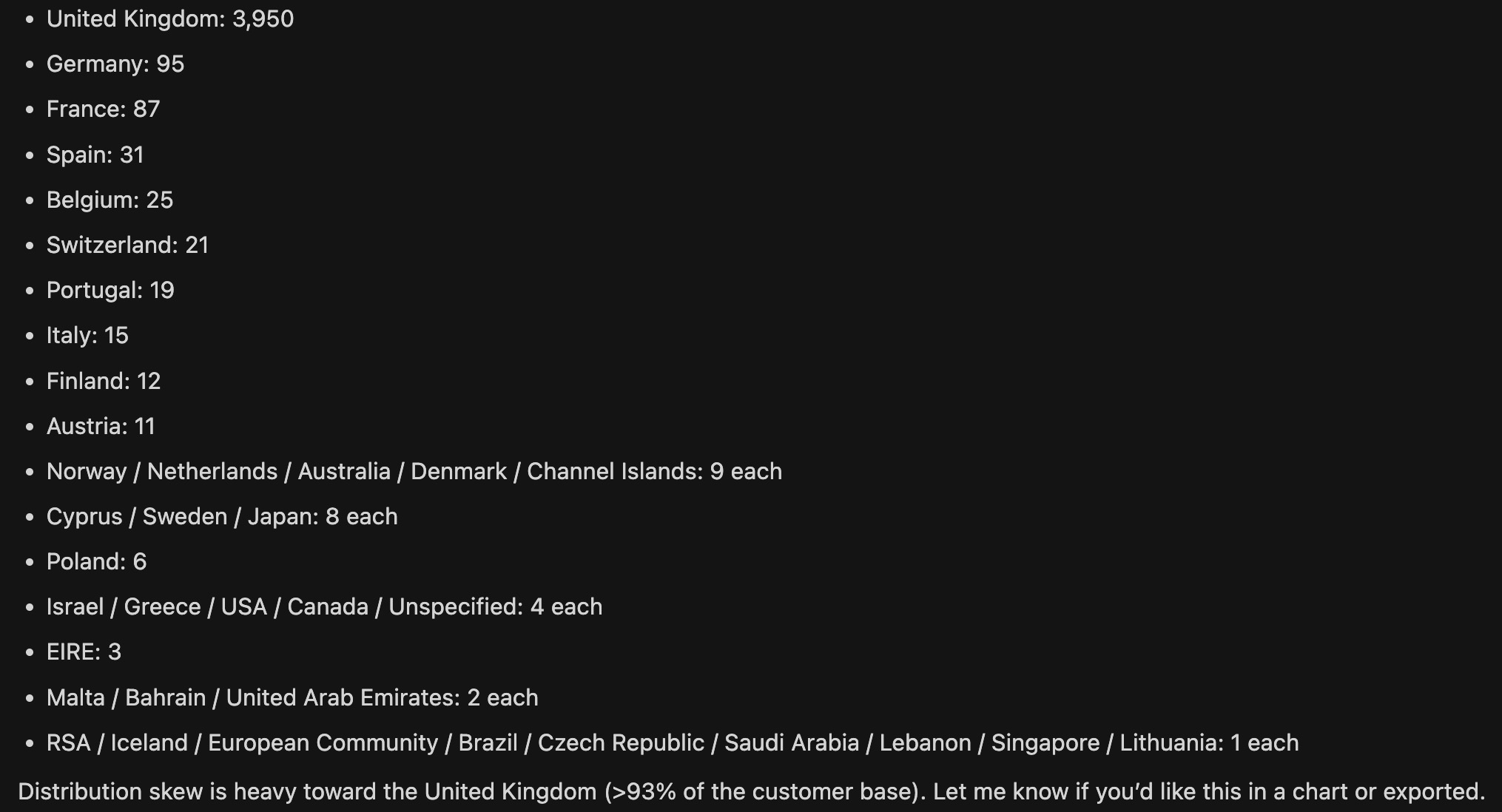
Further request:
Please convert the above results into a table.Output:
Best-selling products analysis
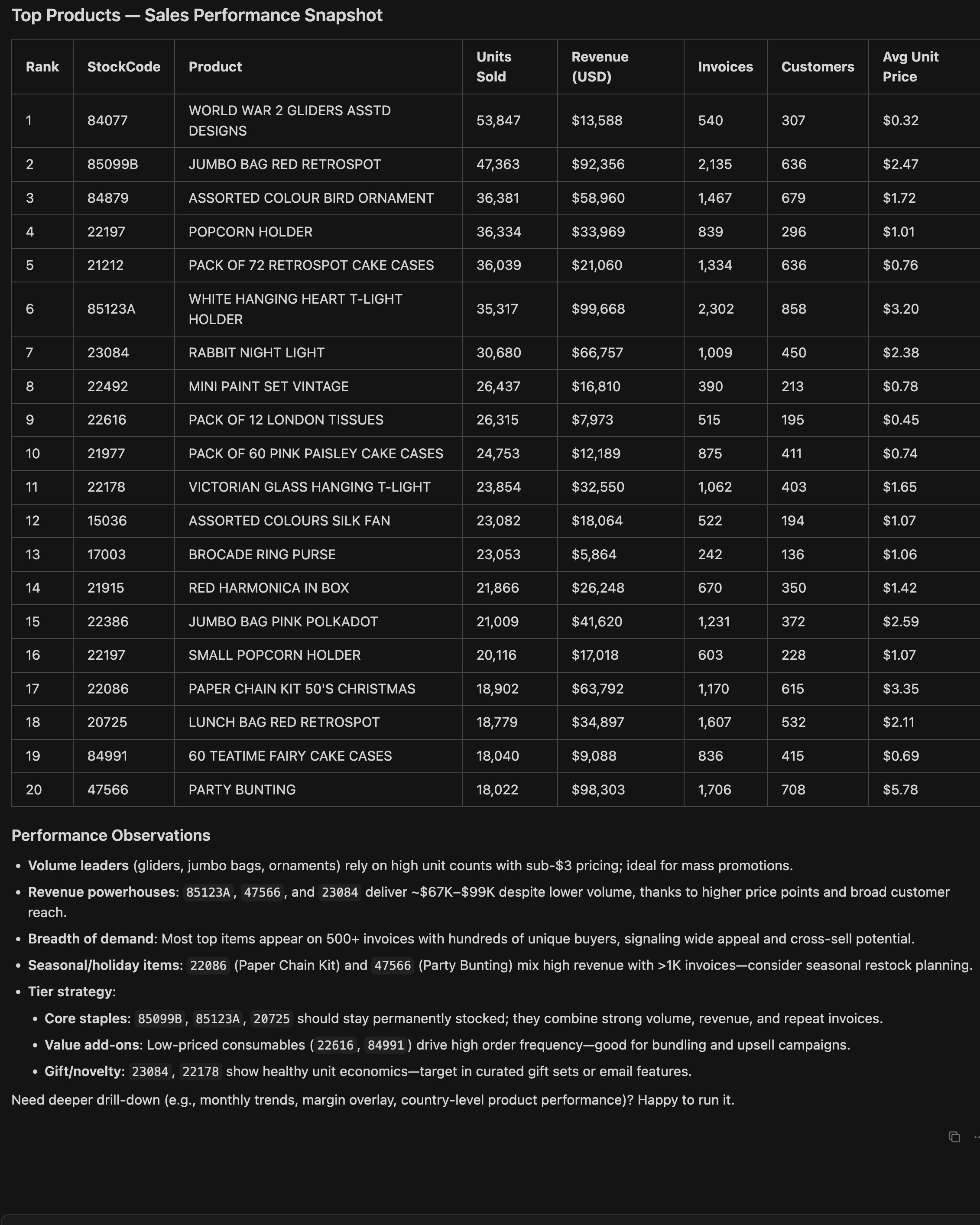
Instruction input:
Find the most popular products and show their sales performance.Output:
Cursor summarizes the most popular products with performance insights and displays them in a ranked table or bar chart.
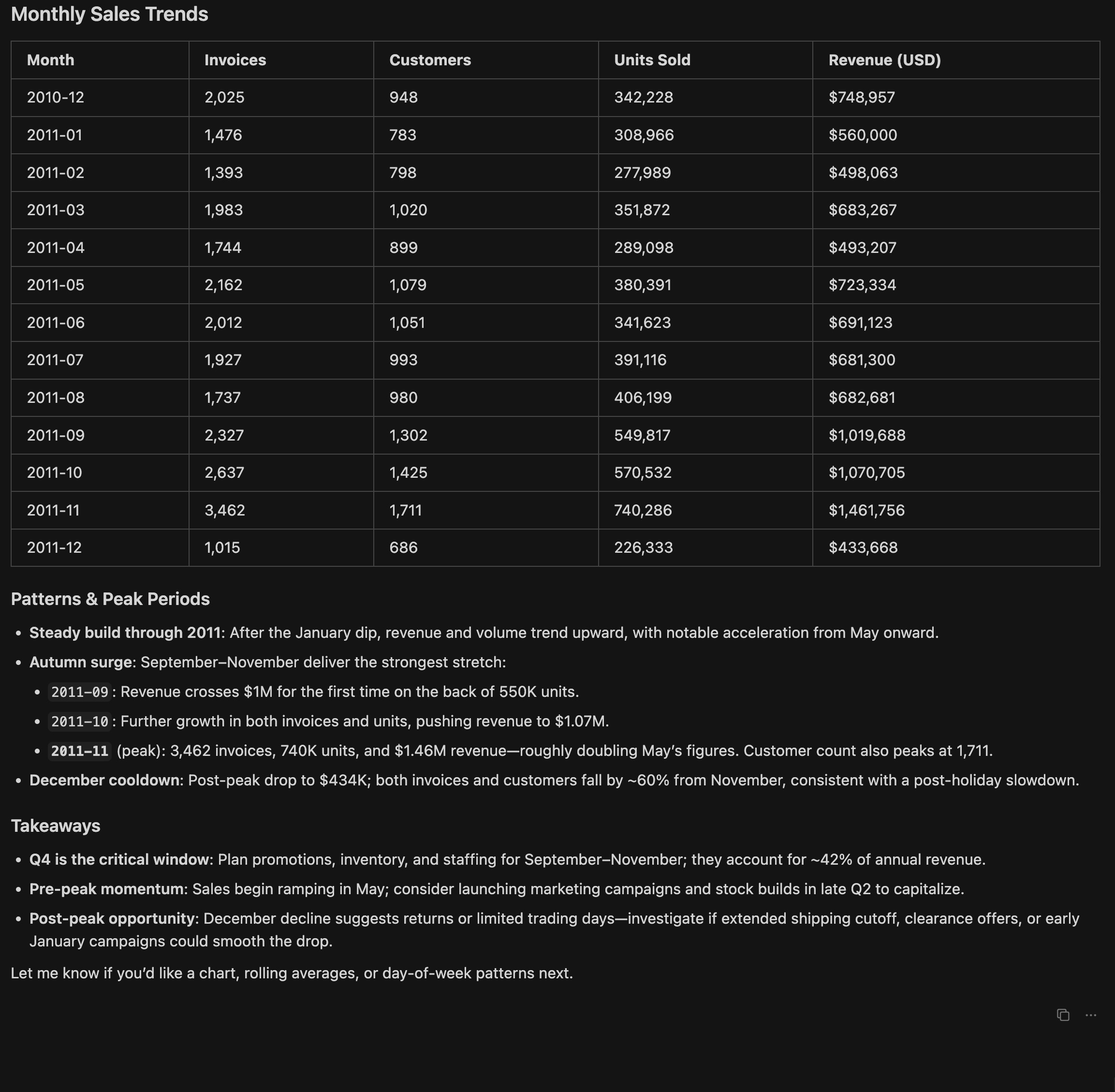
Sales trend over time
Instruction input:
Analyze monthly sales trends and identify peak periods.Output:
Cursor generates a line chart showing monthly sales trends with peak periods highlighted (for example, November and December for holiday shopping).