







OceanBase Database adopts a single-cluster multi-tenant design and natively supports cloud database architecture. It supports various deployment forms such as public cloud, private cloud, and hybrid cloud.
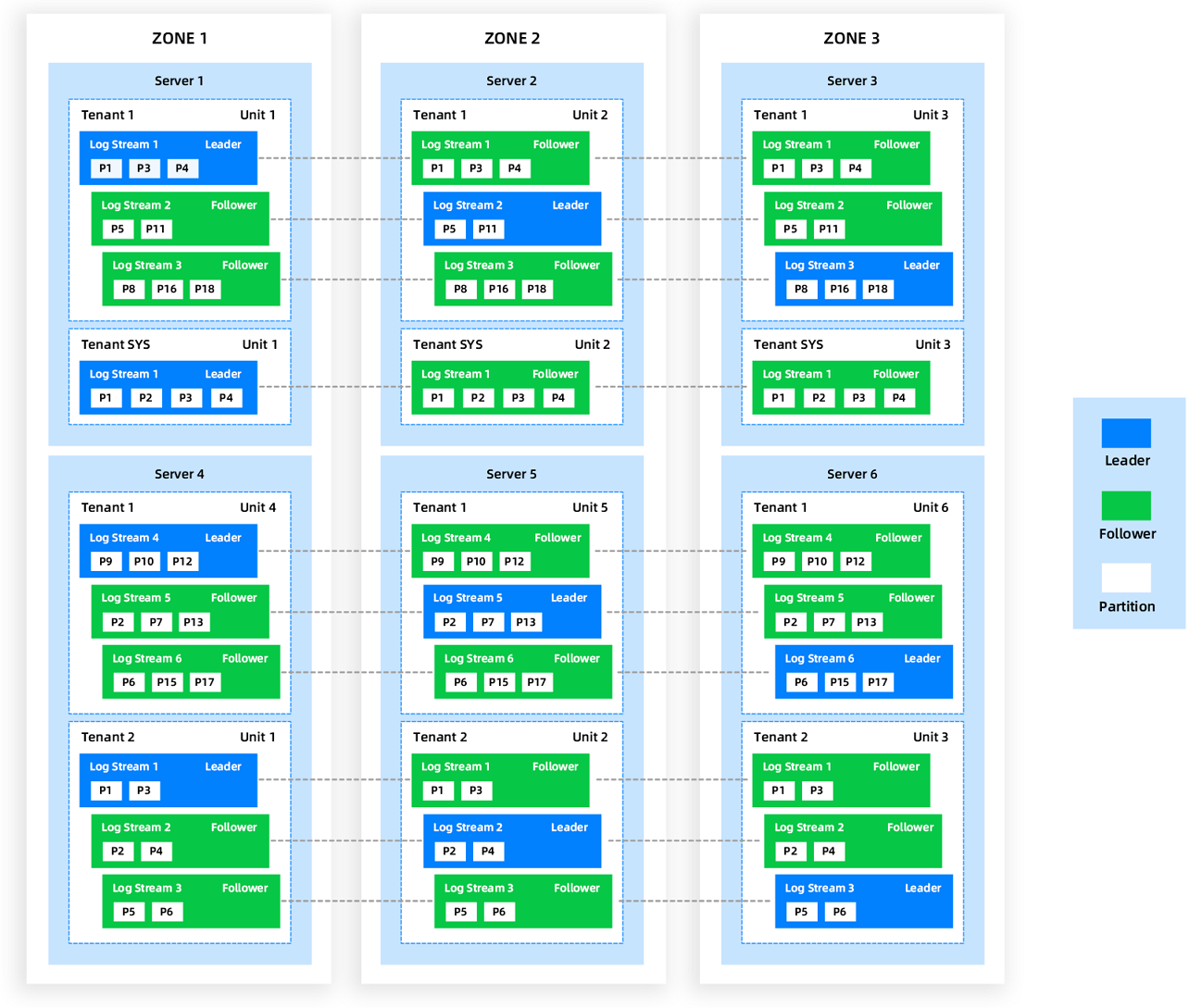
OceanBase Database implements resource isolation through tenants, so that each database service instance is unaware of the existence of other instances. OceanBase Database uses permission control to ensure tenant data security and, combined with its strong scalability, provides secure and flexible database-as-a-service (DBaaS).
A tenant is a logical concept. In OceanBase Database, a tenant is a resource allocation unit and the basis for the management of database objects and resources. It is critical for system O&M, especially for the O&M of cloud databases. In a sense, tenants are comparable to "instances" in a conventional database system. Tenants are completely isolated from each other. In terms of data security, OceanBase Database forbids cross-tenant access to prevent data assets of a tenant from being stolen by other tenants. In terms of resource utilization, a tenant in OceanBase Database has exclusive resource quotas. In summary, a tenant can be seen as a container for database objects and resources such as CPU, memory, and I/O resources.